Best Electric SUV Cars With Best Range in Nepal
October 12, 2026
Best Electric SUV Cars With Best Range in Nepal
October 12, 2026
With range being the top concern for purchasing an electric SUV in Nepal, it is simple to get fixated on one figure and think that the largest is the ideal choice.
But Nepal makes EV range more complicated.
A Kathmandu commute, a Kathmandu-Pokhara highway drive, and a hill-road trip can be very different on the same electric SUV. The distance you can travel is dependent on traffic, elevation, speed, passenger load, air-conditioning, road conditions, and charging access.
So, asking only which electric SUV has the longest range in Nepal is not enough, we should consider a bigger picture range, battery capacity, charging, ground clearance, road suitability and practicality.
Key Highlights
The JAECOO J5 provides up to 461 km range as claimed; the J6T range is 431 km and the OMODA E5 range is 430 km.
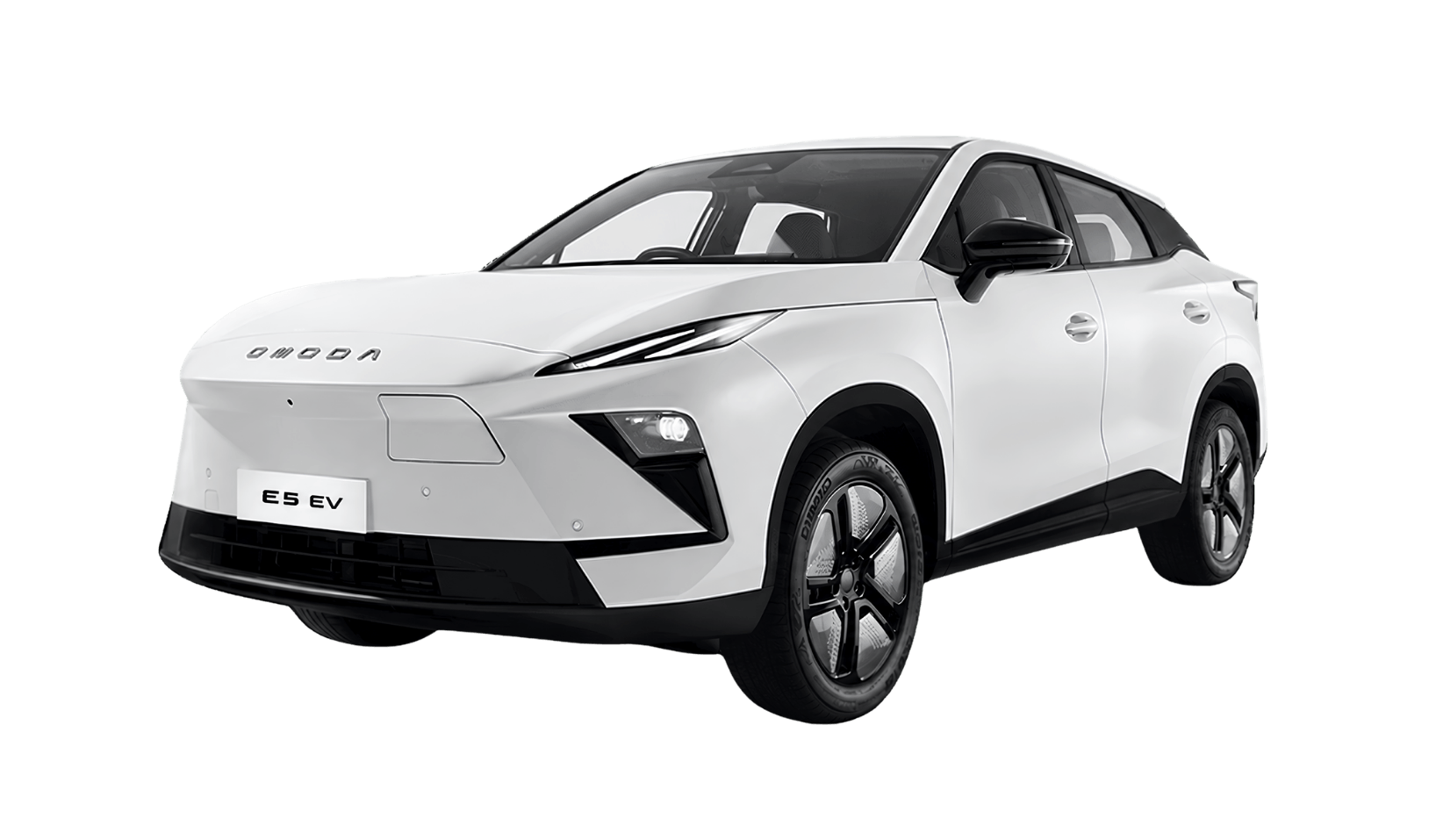
The OMODA E5 Pro has a 350 km WLTP range, a 50.7 kWh LFP battery and 191 mm ground clearance, making it a practical choice for buyers who don't always have to choose the largest battery.
In Nepal, range is just one aspect of the equation. Access to the charging station, ground clearance, road surfaces, and driving habits can be just as significant.
However, the range figure is not always the most important factor for the right EV. That's the one that has enough usable range and capability for your roads that you actually drive.
Range matters, but the biggest number is not always the most useful. EVs can use different testing standards, including WLTP, MIDC and NEDC, so their figures should not be compared directly.
For example, the OMODA E5 is rated at 430 km WLTP, while the OMODA E5 Pro offers 350 km WLTP. Since both use the same test cycle, their figures are easier to compare.
For Nepal, also consider battery size, charging access, road conditions, elevation and your regular driving distance. The right EV is the one that provides enough practical range for your everyday routes.
The JAECOO J5 is listed with up to 461 km claimed range. These numbers are based on different test bases and cannot just be compared by the magnitude of the number.
A buyer's question is what each SUV provides for a specific driving experience.
|
Electric SUV |
Battery |
Published range |
Ground clearance |
Key consideration |
|
JAECOO J5 |
58.9 kWh CATL LFP |
Up to 461 km* |
185 mm |
Range + family practicality |
|
OMODA E5 |
61 kWh LFP |
430 km WLTP |
180 mm |
Mixed city + highway use |
|
JAECOO J6T |
65.69 kWh CATL LFP |
Up to 431 km* |
225 mm |
Rough roads + terrain capability |
|
OMODA E5 Pro |
50.7 kWh LFP |
350 km WLTP |
191 mm |
City + regional driving |
Claimed/listed range: test-cycle equivalence cannot be assumed.
You might also like: Which Electric SUV Has the Longest Range in Nepal?
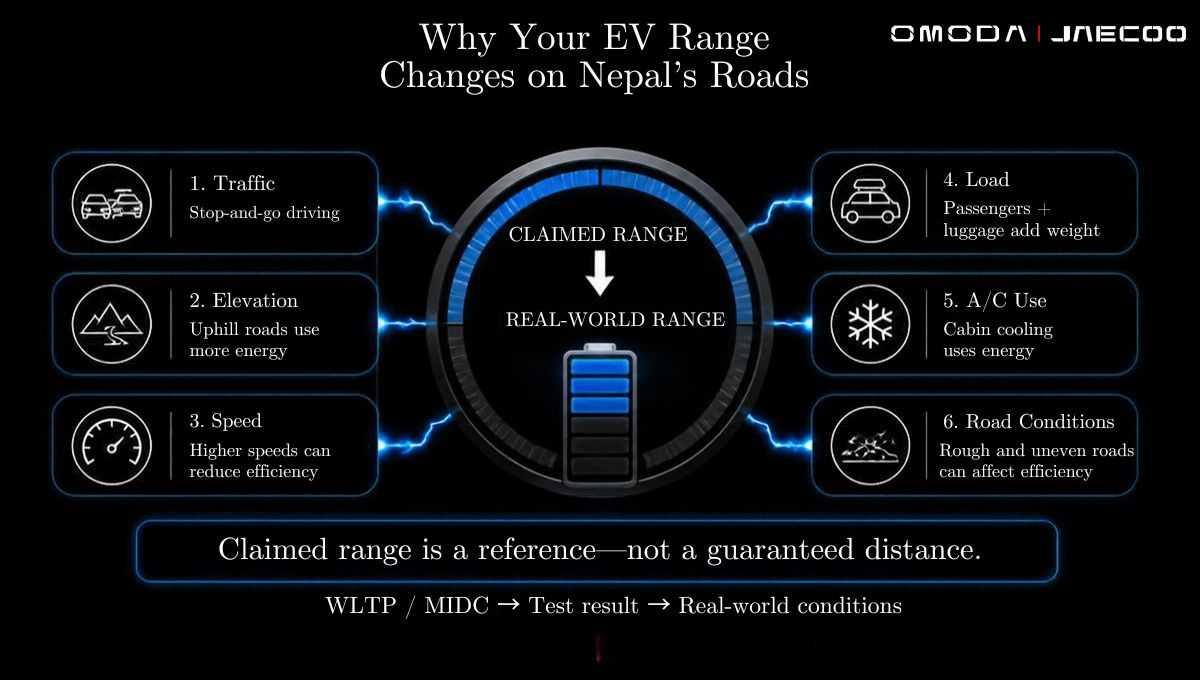
The published range figure provides a reference. It is not a guarantee that all drivers will achieve the same distance.
Consider a Kathmandu–Pokhara journey. You may encounter traffic leaving the Valley, higher highway speeds, elevation changes, climbs, descents, and changing road surfaces.
Energy consumption may be further altered by adding passengers, luggage, air conditioning, and weather conditions.
Real-world EV range can be affected by:
Driving speed
Traffic
Road gradient and elevation
Passenger and luggage load
Air-conditioning
Weather
Tyre pressure
Road surface
Driving style
That is why we suggest using the manufacturer's range as a planning guide, rather than an actual distance.
The OMODA E5 Pro is a good case study for Nepal. It's rated for 350 km WLTP and a published Kathmandu–Pokhara road test recorded 51% battery use and resulted in an estimated real-world range of around 330 km under those specific test conditions. This is a valuable context but should not be assumed as the universal number for all drivers.
Also read: OMODA E5 Pro range in real Nepal driving conditions
WLTP (Worldwide Harmonized Light Vehicles Test Procedure) is a newer testing standard designed to reflect more realistic driving conditions, while MIDC (Modified Indian Driving Cycle) is an Indian test cycle conducted under more controlled conditions.
Always read the test cycle after the number when comparing the best long-range electric SUV in Nepal.
WLTP and MIDC are different testing procedures. This means a 656 km MIDC figure should not automatically be considered equivalent to a 430 km WLTP figure.
For a better comparison process, it is better to use:
Test cycle → battery size → charging capability → road conditions → real-world evidence → your driving pattern
This is especially crucial when comparing imported EVs in Nepal, as various brands might report different metrics using different testing protocols.
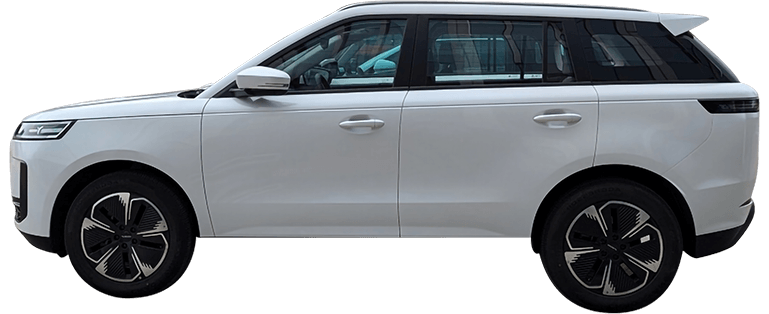
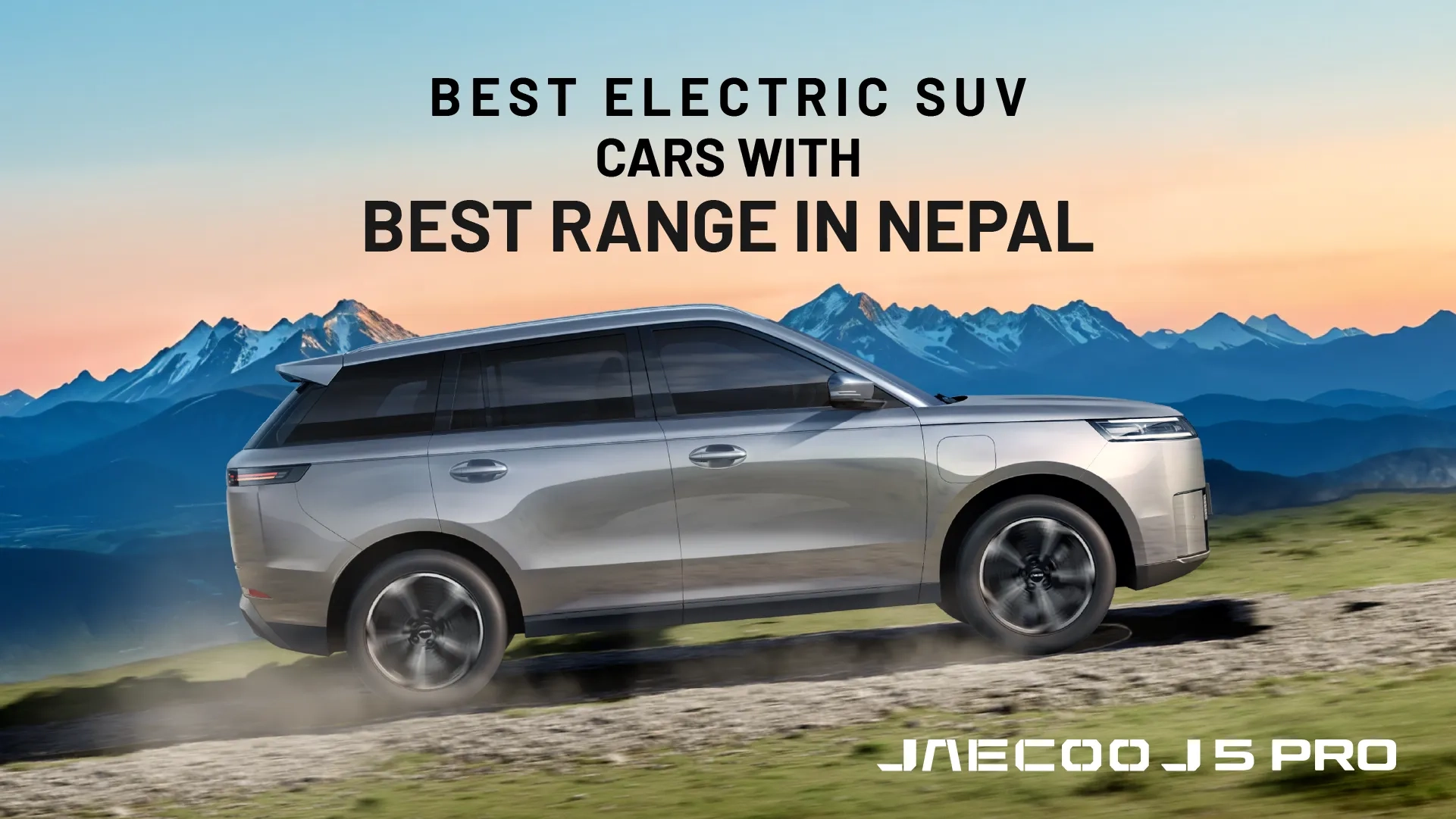
The range-focused one is the JAECOO J5 for buyers within the OMODA & JAECOO range.
It uses a 58.9 kWh CATL LFP battery, produces 155 kW, and is listed with up to 461 km claimed range. It also has 185 mm ground clearance and 480 litres of boot space.
The official price for the JAECOO J5 FWD is quoted at NPR 56.99 lakh.
For us, the interest is not as much in the size of the specification sheet and more in the balance- family-friendly SUV format, useful range, and adequate clearance for regular city and highway driving.
You might also like: JAECOO J5 vs J6T: Which SUV fits your driving?
The OMODA E5 uses a 61 kWh LFP battery and is listed with a 430 km range. The ground clearance currently specified is 180 mm in Nepal.
The official price for the current model is NPR 56.99 lakh, and the E5 Dual Tone is priced at NPR 57.39 lakh.
This makes the E5 a potential choice for those who wish to secure a bigger battery and a more upscale electric SUV for city driving and extended intercity trips.
Don't decide on it just because of the size of the battery, but think about how often you need to travel long distances and where the charging stations are on your normal driving trips.
Not all buyers require a 60+ kWh battery.
The OMODA E5 Pro is powered by a 50.7 kWh LFP battery, with a 99KW and 288 Nm output and up to 350 km of WLTP range. The 191 mm ground clearance is also helpful on Nepal's diverse roads.
The current official price is NPR 51.99 lakh, while the E5 Pro Dual Tone is NPR 52.39 lakh.
If a buyer is primarily looking to commute to Kathmandu and occasionally go for longer vacations, this may make more sense than buying a battery specifically for those longer journeys.
The E5 Pro also offers up to 110 kW DC fast charging, 19+ ADAS systems and a 540° surround-view system in the current Nepal specification.
Read next: OMODA E5 Pro price, specifications and features in Nepal
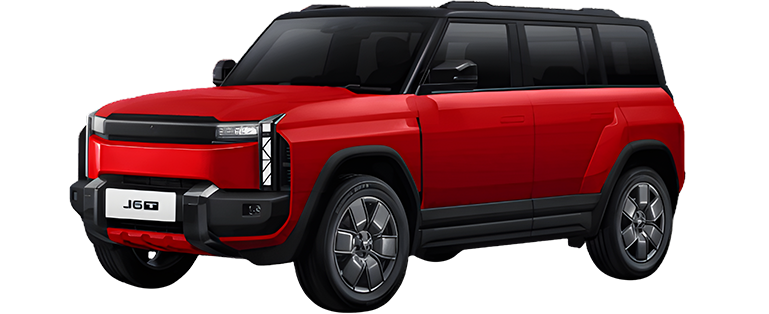
The JAECOO J6T shows why range should not be the only factor in an electric SUV.
It uses a 65.69 kWh CATL LFP battery, has a claimed range of up to 431 km, and offers 225 mm ground clearance. It is also a rear-wheel-drive SUV with a 135-kW motor and 625 mm rated water-wading capability.
According to our current official price page, it is priced at NPR 71.99 lakh.
The important point is that the J6T does not have the highest range in this comparison. Its greater appeal is its package with a focus on terrain.
If you're buying for frequent rough roads, steep grades, gravel or monsoon-driven tracks, it could be more important than another few kilometres of range.
Also read: How the JAECOO J6T handles rough roads and hill routes in Nepal
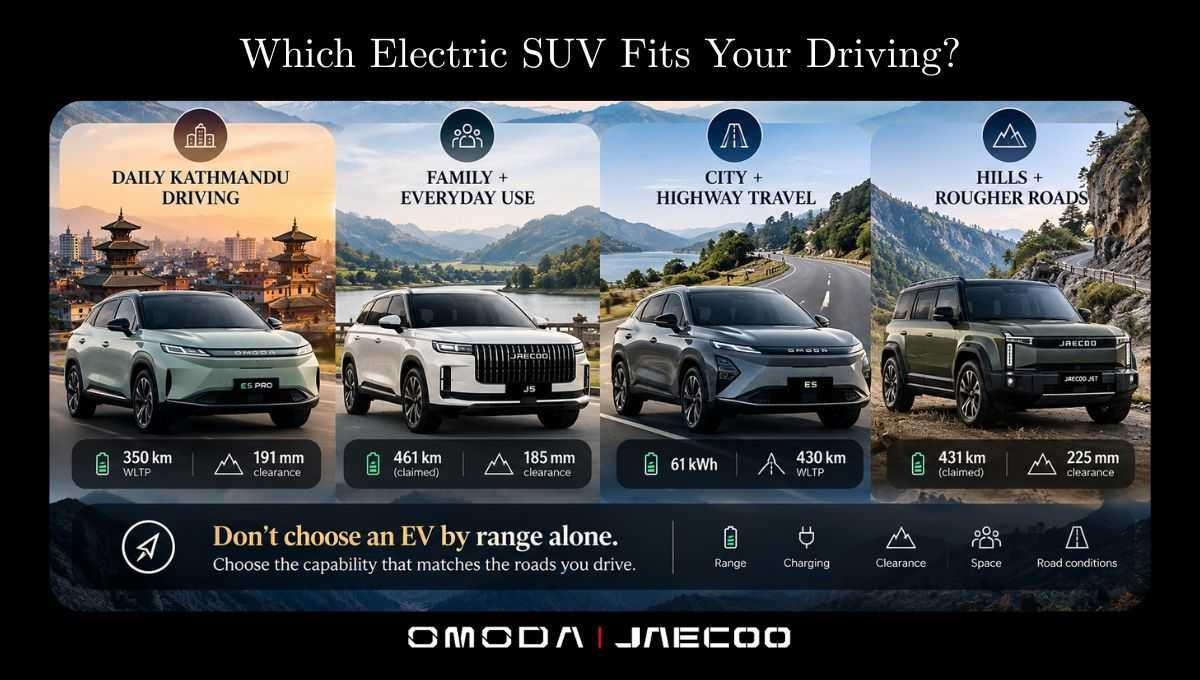
Instead of focusing only on which EV has the biggest battery, consider how your daily driving habits and typical routes fit the vehicle.
|
Your driving pattern |
What to prioritize |
|
Kathmandu daily commute |
Efficiency + home charging |
|
Weekend trips |
Balanced range + charging |
|
Frequent highway travel |
Range + Battery + DC charging |
|
Family travel |
Range + space + comfort |
|
Hill roads |
Ground clearance + stability |
|
Rough or monsoon-affected roads |
Clearance + road capability |
Your needs will be quite different if you use the car most days for 40-60 km, but are able to charge at home regularly, versus someone who is travelling long distances between cities on a regular basis.
The aim is not necessarily to purchase the largest battery EV. It's supposed to have a reasonably practical range and sufficient charge buffer.
Before making a shortlist, we recommend checking:
1. Range and test cycle: Know whether the published figure is WLTP, MIDC, or another measurement.
2. Battery capacity: A larger battery can help, but efficiency also matters.
3. Charging capability: Check both home AC charging and DC fast charging.
4. Ground clearance: Especially important for uneven roads, steep approaches, and speed bumps.
5. Ownership support: Look at servicing, warranty, parts availability, and charging assistance.
6. Current price: Always confirm the latest official price and variant before booking.
You can check the latest OMODA & JAECOO pricing on our official electric car price page.
There is no single answer for every Nepalese driver.
Our OMODA & JAECOO range:
JAECOO J5: a strong fit for buyers prioritizing its 461 km range, family practicality and everyday driving.
OMODA E5: suited to buyers looking for a 61-kWh battery and 430 km published range for mixed city and intercity use.
OMODA E5 Pro: a practical option for buyers who want a 350 km WLTP range, 191 mm clearance and a strong technology package at a lower entry price.
JAECOO J6T: designed around its 431 km range, 225 mm ground clearance and terrain capability for buyers seeking greater confidence on rougher roads.
Ultimately, the best electric SUV in Nepal is not simply the one with the biggest number in its brochure.
It is the SUV that gives us enough range for our normal routes, charging that fits our routine, sufficient clearance for our roads, and the comfort, safety and ownership support we expect.
Start with our latest OMODA & JAECOO EV prices, explore the models that match your driving pattern, and then talk to our team or book a test drive.
Because the best way to understand an electric SUV is not just to read its range figure. It is to experience how it fits the roads you actually drive.
The JAECOO J5 is currently listed with up to 461 km claimed range, ahead of the J6T at 431 km and OMODA E5 at 430 km.
No. Speed, traffic, elevation, road conditions, passengers, air-conditioning, weather and driving style can all affect actual consumption. A published Nepal road test of the OMODA E5 Pro estimated approximately 330 km under its specific conditions versus its 350 km WLTP rating.