Jaecoo Off-Road: Tackling Nepal's Rough Terrain & River Crossings in Monsoon
September 17, 2026
Jaecoo Off-Road: Tackling Nepal's Rough Terrain & River Crossings in Monsoon
September 17, 2026
225 mm ground clearance for rough and uneven roads.
625 mm water-wading capability for suitable shallow crossings.
9 driving modes for varied terrain and road conditions.
Up to 55% gradient capability with HAC and HDC.
431 km range with a 65.69 kWh battery.
The Nepalese terrain changes drastically in a single drive in an SUV. A smooth city road can turn into gravel, mud, potholes or a steep hill section, while the monsoon brings waterlogged roads, slippery surfaces and unpredictable road conditions.
If you're looking at an electric SUV, it's not just a matter of whether it has a big battery or high-tech features. Water-wading, ground clearance, traction management, suspension and hill-control systems can all be critical.
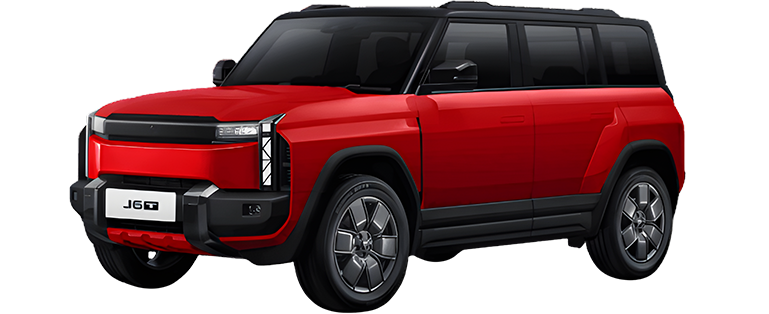
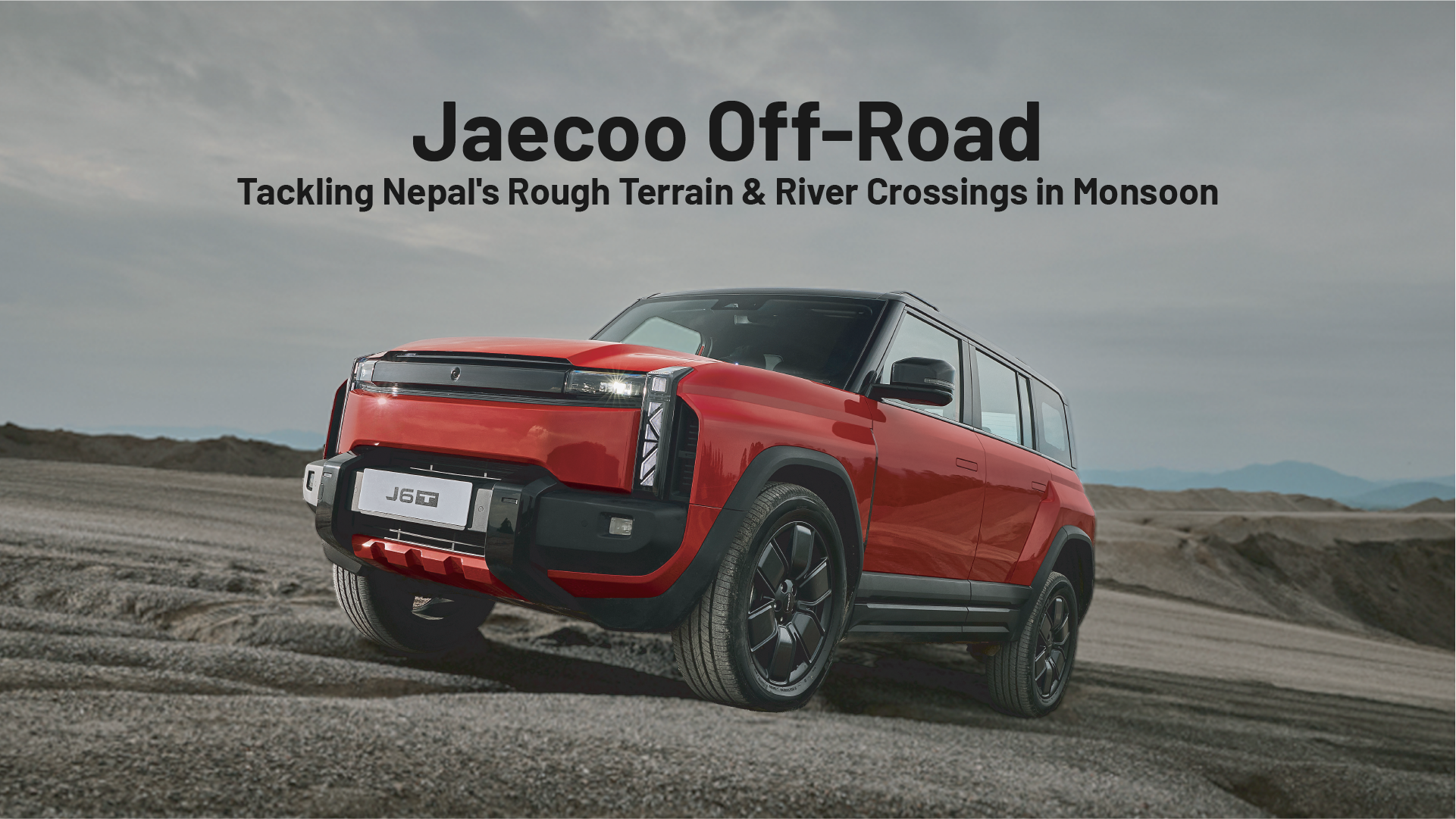
This makes the JAECOO J6T's off-road capability particularly relevant for drivers in Nepal. The J6T combines 225 mm of ground clearance, 625 mm of water-wading capability, up to 55% gradient capability, nine intelligent driving modes, H-ARM multi-link rear suspension, and a 540° HD panoramic camera.
It is also a single-motor RWD electric SUV with a 65.69 kWh CATL LFP battery, 135 kW of power, and 220 Nm of torque.
However, what do these numbers really indicate on Nepal's roads?
This guide explores the capabilities of the Jaecoo J6T off-road vehicle in Nepal, covering everything from rough terrain to monsoon weather and hill driving, water crossings, charging, range, and practical use.
|
Specification |
JAECOO J6T |
|
Ground Clearance |
225 mm |
|
Water-Wading Capability |
625 mm |
|
Maximum Gradient Capability |
Up to 55% |
|
Intelligent Driving Modes |
9 |
|
Drive Layout |
RWD |
|
Motor |
Single Motor |
|
Motor Power |
135 kW |
|
Torque |
220 Nm |
|
Battery |
65.69 kWh CATL LFP |
|
Claimed Range |
Up to 431 km |
|
Rear Suspension |
H-ARM Multi-link |
|
Camera System |
540° HD Panoramic |
|
DC Fast Charging |
130 kW |
|
Fast-Charging Time |
28 minutes |
|
Charging Port |
CCS2 |
|
Price in Nepal |
NPR 69,99,000 |
While these are the specifications that define the J6T's capability, they become more apparent and useful when applied in the context of driving conditions in Nepal.
Road conditions can vary greatly from place to place and also seasonally in Nepal.
During periods of heavy rain, urban drivers are likely to find potholes, damaged tarmacs, and flooding. Rural roads may become muddy or rutted, and hill roads may present steep grades, loose gravel and uneven surfaces.
An SUV with a more robust ground clearance and suitable traction configurations can prove beneficial during challenging road conditions for drivers navigating between Kathmandu, Pokhara, Chitwan, Butwal, Dharan, Biratnagar, and other locations in Nepal.
J6T is not a magic elixir for making difficult roads risk-free. Instead, its equipment is geared to give it more capability and control over the more difficult surface.
One important specification when driving on Nepal's uneven roads is ground clearance.
The Jaecoo J6T features 225 mm of ground clearance, allowing for ample clearance between the road and the vehicle's bottom. It is helpful when driving over potholes, ruts, broken road edges, gravel, speed breakers, and other rough patches.
The extra clearance can also be useful when driving up steep ramps, on uneven surfaces and on sudden road level changes.
But with increased ground clearance, that doesn't mean an SUV is immune from underbody damage. However, vehicle speed, size of obstacles, approach angle, tyre grip, and road conditions remain important.
For more context on why clearance matters when choosing an EV for Nepal, read our guide to why ground clearance matters in electric SUVs in Nepal.
The J6T rated water-wading ability of 625 mm is significant for monsoon driving and is adequate for shallow water crossings.
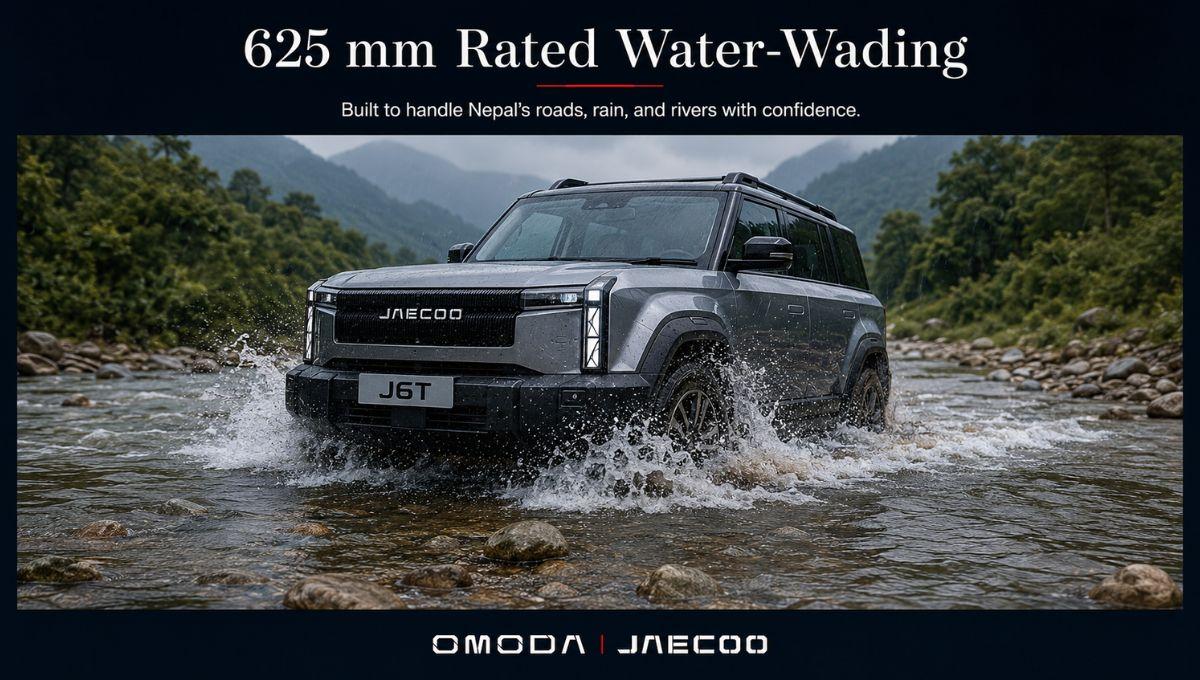
This can be helpful to Nepalis who drive on rural roads where temporary puddles of water or shallows occur.
The 540° HD panoramic camera also provides additional visibility around the vehicle, helping the driver monitor surroundings when manoeuvring through tight or uneven areas.
However, there are significant differences between the ability to wade in water and actual safety in the water.
Not all 625 mm deep crossings are safe. Water speed, current, hidden potholes, loose surfaces, changing water levels, and the condition of the crossing are important.
Do not enter fast moving or unfamiliar water depths just because the vehicle has a "wading" rating.
The J6T comes with intelligent driving modes tailored to the road and terrain. It comes in handy in Nepal, where a trip may involve asphalt, gravel, mud, steep roads, and slippery surfaces.
Mud and Sand: Use the right terrain settings to control traction and wheel spin on muddy or loose surfaces.
Snow and Ice: Dedicated settings can help optimize vehicle response on low-grip surfaces, particularly on higher mountain routes during winter.
Eco and Sport: These modes offer different driving responses for regular driving in town and on the highway.
The real advantages of the nine modes are that they are not just extra driving modes; they adjust the way the vehicle behaves according to the road situation.
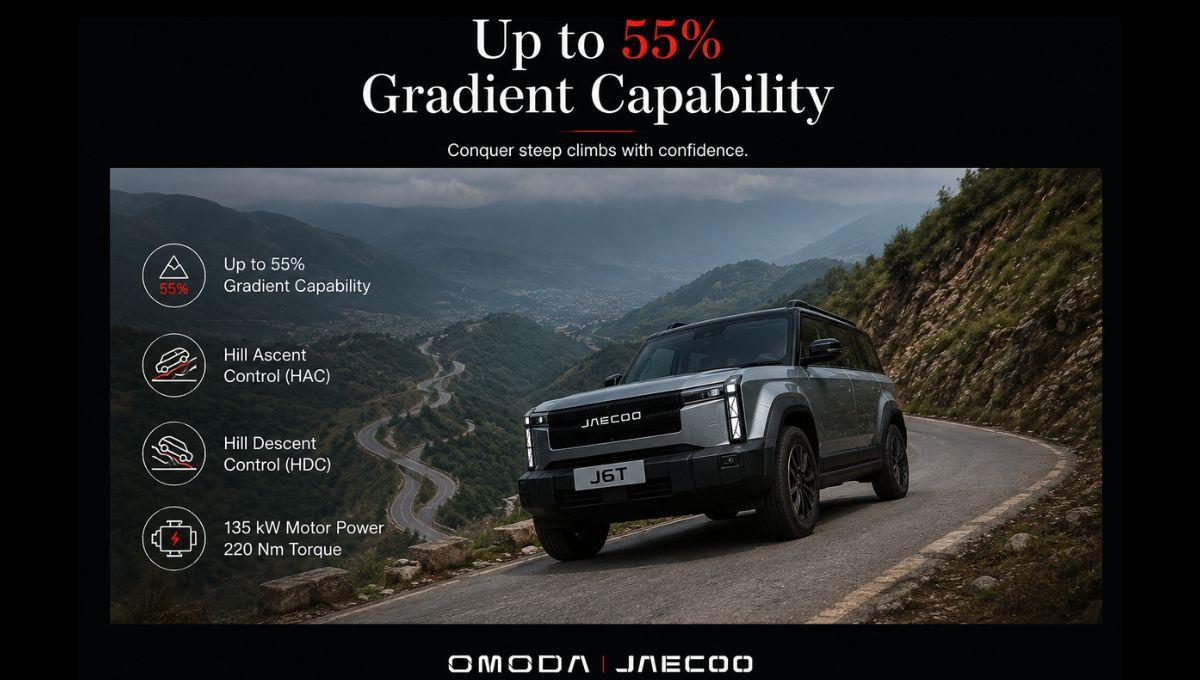
Steep roads are common across Nepal, especially outside the major urban areas.
The J6T is rated for gradients of up to 55% and is equipped with Hill Ascent Control (HAC) and Hill Descent Control (HDC).
HAC is intended to assist with controlled climbing, while HDC helps manage speed while travelling downhill.
The J6T also produces 135 kW of motor power and 220 Nm of torque from its single electric motor. The J6T uses a rear-wheel-drive (RWD) layout, so it's not a four-wheel-drive SUV.
This doesn't mean it can't cope with difficult roads, but conditions of the road's surface, tyres, the slope, the load and the weather are significant when driving off-road.
The ground clearance allows the vehicle to clear obstacles, while suspension determines the handling of the vehicle if the road is rough.
The J6T uses H-ARM multi-link rear suspension, designed to contribute to road grip, control and ride quality.
That becomes relevant on Nepal's:
Pothole-filled urban roads
Gravel surfaces
Broken rural roads
Uneven hill routes
Roads that have been damaged by the seasons.
The quality of roads has an impact on a sophisticated suspension, but a well-designed system can help keep the vehicle in more control with changing road conditions.
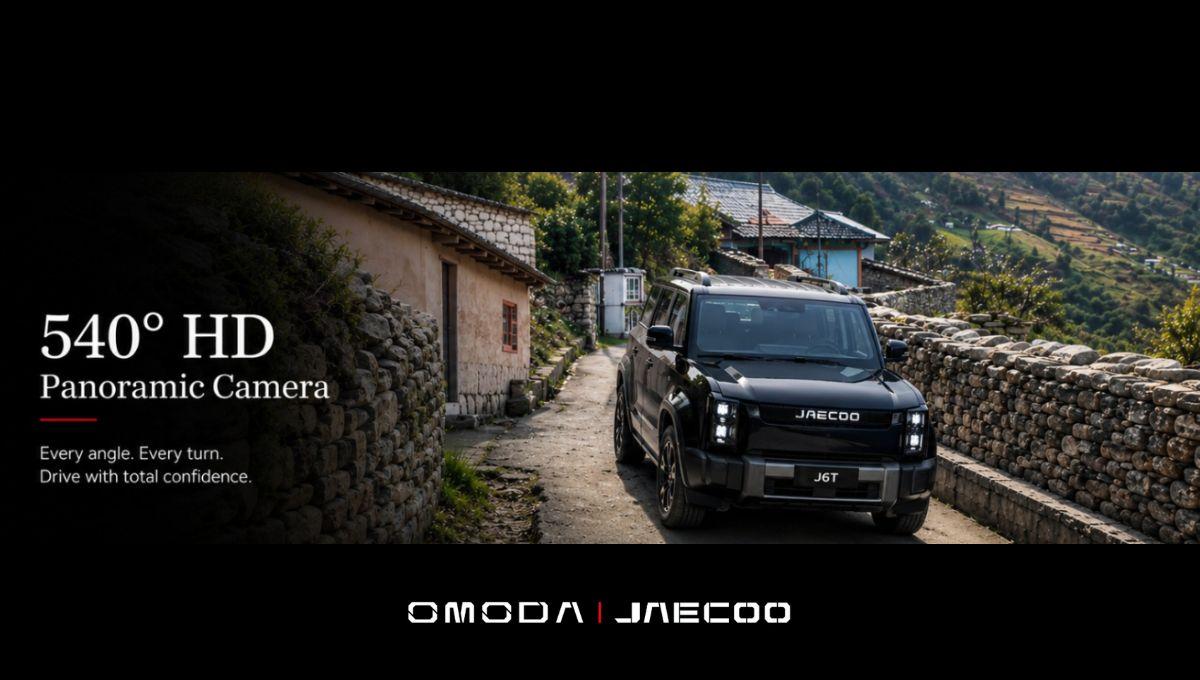
When driving on a narrow road or rough terrain, a panoramic camera is more than just a parking convenience.
The J6T's 540° HD panoramic camera provides additional visibility around the vehicle, which can be useful when:
Reversing on narrow roads
Parking on uneven surfaces
Maneuvering through tight spaces
Checking nearby obstacles
Driving through rough terrain at low speed
The camera should not replace direct observation but rather be used as a tool for helping the driver.
The J6T has a claimed range of up to 431 km from its 65.69 kWh CATL LFP battery.
This may make the car a viable choice for most intercity trips and everyday driving, but don't assume that the claimed range will be delivered.
Range can vary with:
Hill climbs
Traffic
Weather
Vehicle load
Driving style
Air-conditioning use
Off-road conditions
Longer trips, therefore, must be planned, not just on the basis of the "maximum" claimed.
For routes where charging infrastructure is important, see our guide to Nepal’s EV charging network and how to plan a trip.
The J6T supports 130 kW DC fast charging and uses a CCS2 charging port. The listed fast charging time is 28 minutes under the following charging conditions.
Fast charging can make a difference on longer journeys because it reduces the amount of time spent at a charging station.
Actual charging time can vary with battery temperature, starting state of charge, charger output, and other conditions.
For an ownership-focused look at charging economics, read our guide to the cost of charging an OMODA or JAECOO EV in Nepal.
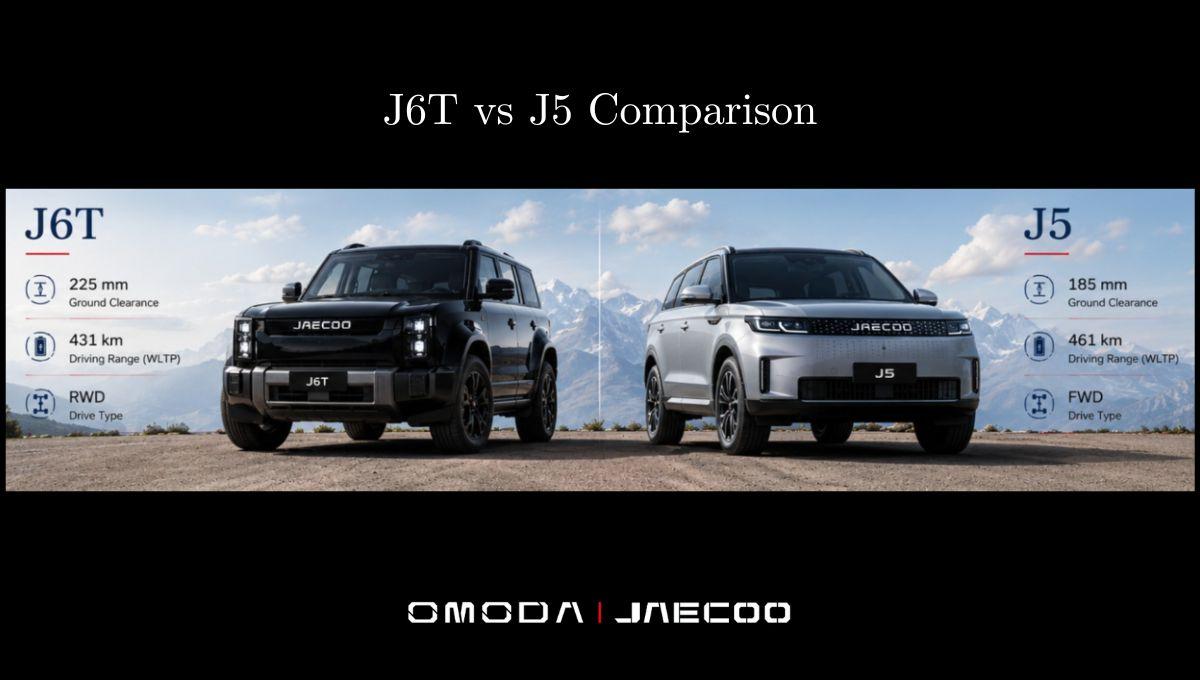
The J6T and the J5 have slightly different focus.
|
Feature |
JAECOO J6T |
JAECOO J5 |
|
Price |
NPR 69,99,000 |
NPR 56,99,000 |
|
Ground Clearance |
225 mm |
185 mm |
|
Water-Wading Capability |
625 mm |
450 mm |
|
Battery |
65.69 kWh |
58.9 kWh |
|
Motor Power |
135 kW |
155 kW |
|
Torque |
220 Nm |
288 Nm |
|
Drive Layout |
RWD |
FWD |
|
Claimed Range |
431 km |
461 km |
The J6T has more terrain-focused packaging, whereas the J5 could be more suitable for those who want to travel further on the road.
For a detailed specification comparison, read our JAECOO J5 vs J6T guide.
The J6T can cover many tough road tests but be sure to keep the vehicle specs in mind with the road you're heading on.
|
Driving Condition |
J6T Suitability |
|
City roads |
Excellent |
|
Highway driving |
Well suited |
|
Gravel roads |
Well suited |
|
Broken rural roads |
Well suited |
|
Steep paved roads |
Well suited |
|
Muddy surfaces |
Capable with appropriate settings |
|
Suitable shallow water crossings |
Able to operate under rated conditions |
|
Snow or icy surfaces |
Available terrain modes; conditions still apply. |
|
Fast-moving floodwater |
Avoid |
|
Unknown-depth crossings |
Avoid |
|
Severe technical off-road terrain |
Requires careful assessment |
The difference is off-road ability and off-road immunity.
While one road is considered unsafe due to weather, water, landslides or other road conditions, the vehicle may have very high ground clearance, sophisticated driving modes, and a very good wading ability.
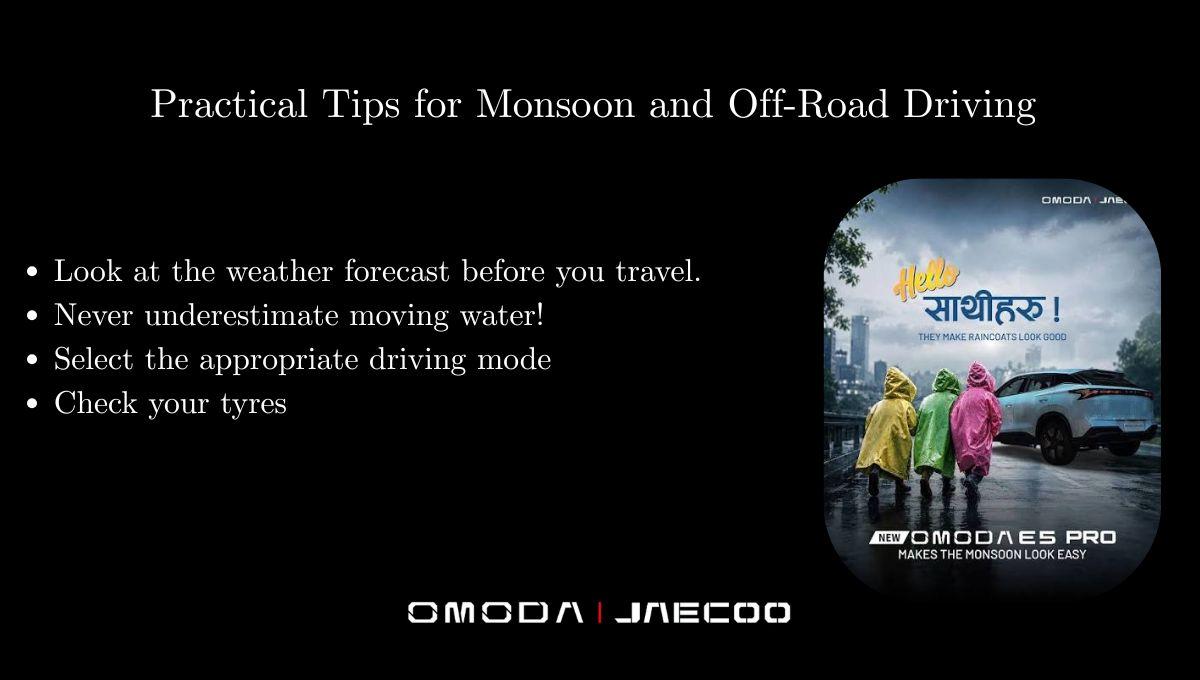
Monsoon conditions can change rapidly. Landslides and debris may be a hazard on mountain roads, and water levels may increase during periods of heavy rainfall.
Never cross waterways that are fast-moving or have unknown depths, even if the vehicle is rated for wading.
Before hard driving areas, choose the correct terrain setting. Don't wait until the traction has already been lost.
Tyre conditions and appropriate inflation are important for grip, braking, and control on wet, muddy and loose surfaces.
Plan out charging stations on routes outside urban areas before leaving and remember to plan the range you need for traffic and weather conditions, detours and slower roads.
The Jaecoo J6T off-road capability makes it well suited to many of Nepal’s challenging road conditions. It features a ground clearance of 225 mm, 625 mm rated water-wading capability, nine intelligent driving modes, and an up to 55% gradient capability plus the H-ARM multi-link rear suspension and 540° panoramic camera for added practicality.
Other features include a 135-kW motor, 431 km claimed range, and 220 Nm of torque, which makes it also good for everyday and long-distance driving.
However, the J6T is an RWD electric SUV, not a 4WD vehicle. Fast-moving floodwater, landslides, and highly technical terrain should still be avoided.
The J6T is a suitable choice for Nepali drivers seeking a vehicle that offers robust ground clearance, water-wading ability, and features designed for tough terrains.
Ready to take on Nepal’s roads?
Explore the JAECOO J6T specifications or contact OMODA & JAECOO Nepal to learn more about its capability, features and availability.
Yes. The J6T has 225 mm of ground clearance, nine intelligent driving modes, H-ARM multi-link rear suspension and a 135-kW electric motor producing 220 Nm of torque, giving it useful capability on many rough, uneven and steep roads.
The J6T has a rated water-wading capability of 625 mm. This is helpful for appropriate shallow crossings, but water that is moving or is not deep enough to be measured is not recommended.
Yes. The J6T's 225 mm ground clearance, 625 mm rated wading capability, nine driving modes, HAC, HDC and 540° panoramic camera are useful features for wet and uneven road conditions. They are not used to making dangerous flood water safe.
The J6T has a maximum gradient capability of up to 55%, along with Hill Ascent Control and Hill Descent Control. Its 135-kW motor and 220 Nm of torque provide useful performance on inclines. Subject to actual road surface, tyre grip, weather and route conditions.
No. The J6T specification is RWD with a single motor. The off-road gear the buyer is looking for should not be mistaken for the four-wheel-drive system.
The J6T enjoys 225 mm of ground clearance, which means there will be sufficient additional underbody clearance over potholes, ruts, speed bumps and uneven roads.
The J6T has a claimed range of up to 431 km of 431km, though this varies with the conditions of the terrain, weather, traffic, payload, and driving style.