Embossed Number Plate in Nepal
September 04, 2025
Embossed Number Plate in Nepal
September 04, 2025
Back on August 5, 2025 a decision from a thematic committee meeting asked for embossed number plates to be made mandatory across Nepal from Asoj 1, 2082 (September 17, 2025).
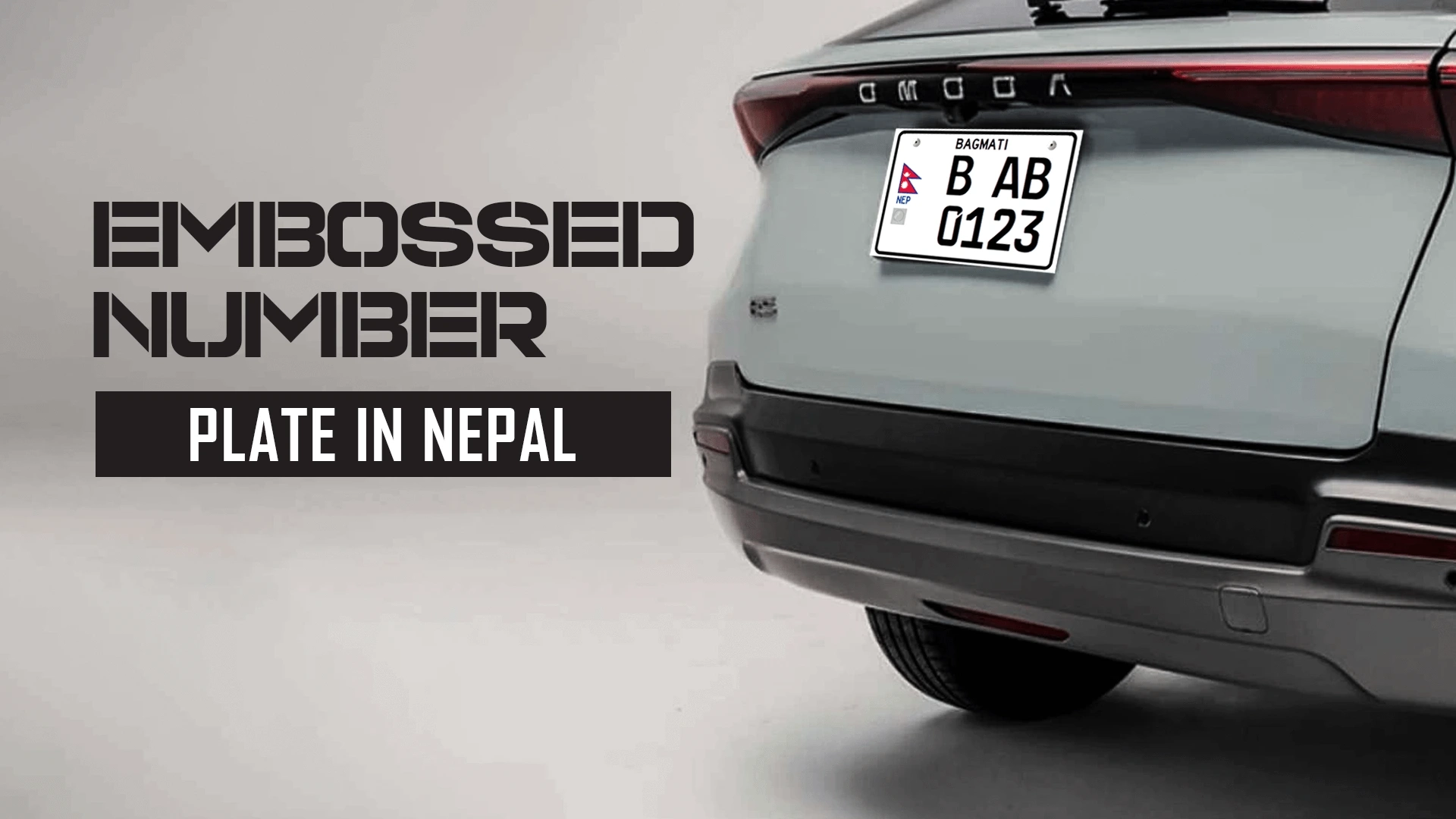
These plates are made of durable aluminum with raised characters, have a reflective finish, and include an embedded RFID chip that connects each vehicle to a central database.
The policy is intended to standardize vehicle identification, reduce forgery, and pave the way for digital transportation services.
Yet, questions remain about capacity, affordability, and readiness. Many criticized this matter, as the public saw a burden/load coming in their head for no reason.
As for now the decision has been slightly changed due to public demand and is made compulsory for newly bought vehicles only. Further decisions and initiatives are on hold.
Note: If you already have a license, check out our complete guide on how to add a category and renew your license in Nepal.
An Embossed number plate, also known as an Electronic Vehicle Number Plate (EVNP), is a high‑security aluminum plate where the alphanumeric characters are pressed (raised) rather than painted.
It has an RFID (Radio-Frequency Identification) microchip embedded to store and verify key registration data of the owner. And it has a tamper‑resistant, standardized format for consistency and enforcement.
Color coding remains consistent with existing conventions while adding digital capability:
This uniform scheme makes visual identification quick, while the RFID chip enables electronic verification.
The mandate is intended to deliver public‑interest benefits and modernize governance:
Follow these steps to complete your EVNP application:
Fill in Required Information of Vehicle and OwnerThis information can be found in your bluebook (bill book).
Vehicle Information
Owner Information
Begin with the official DoTM EVNP portal for form submission, document upload, and fee payment. Later, print those forms out and visit your nearest TMO's office.
Attend your assigned or nearest Transport Management Office for biometrics, Bluebook verification, and final plate collection/installation.
Non‑compliance from Asoj 1, 2082 triggers escalating consequences:
Note: For now the government has held down the “compulsory” tag, so owners of old plates need not worry about these rules.
For smooth and credible implementation, the following actions are essential:
A phased, region‑wise rollout aligned to actual processing capacity is more realistic than a single hard deadline.
Expand plate manufacturing, logistics, and on‑site installation capacity at busy offices to handle surges.
Ensure scanning gates, control rooms, networks, and data centers are fully operational to realize the digital benefits from day one.
Streamline forms, reduce paperwork, extend online services, and staff up counters to minimize queues.
Run bilingual awareness campaigns explaining costs, steps, and benefits; publish daily processing stats to build trust.
Consider bilingual (Devanagari + English) character options to address cultural concerns and reduce resistance.
Establish policies for secure data handling; integrate EVNP with tax, insurance, enforcement, and traffic systems for real‑world utility.
Monitor delivery milestones across contractors and offices to ensure accountability and course corrections.
A Guide to Driving License Application in Nepal
Embossed number plates aim to improve security, standardize identification, and facilitate e-governance in Nepal's transportation system. The concept is sound; the challenge is execution.
With realistic timelines, completed RFID infrastructure, expanded capacity, and clear public communication, the rollout can shift from controversy to credibility—delivering tangible benefits for citizens, operators, and regulators alike.
While the government doesn't have proper set rules for the urgency of this system.
But it is advised for new buyers and owners of Omoda and Jaecoo to apply for their embossed number plates for their vehicles.
You should also keep in mind that sooner or later you will be needed to add to the system, so work on it as suited for you.
From Asoj 1, 2082 (September 17, 2025) for all vehicle categories.
NPR 2,500 (two‑wheelers), NPR 2,900 (three‑wheelers), NPR 3,200 (four‑wheelers), NPR 3,600 (buses/large vehicles).
No. Road tax renewal and ownership transfer may be blocked until your vehicle is EVNP‑compliant (as for now, a new voice under the hold of this subject is yet to come, so we can say that you can renew your tax and transfer ownership even without EVNP).
To curb forgery/theft, enable digital verification, improve tax compliance, and create a standardized national system that supports future online services.
Yes. You must attend biometric verification at a Transport Management Office before issuance.
Citizenship or company registration/PAN, Bluebook (copy + original), latest tax clearance, bank approval letter (if financed), and payment proof.
Some infrastructure is in place, but full readiness requires completing scanning gates, control rooms, and network connectivity across key corridors.
The system currently follows standardized formats. Depending on the policy, bilingual options may be included.
Expect fines, temporary service restrictions (tax renewal/transfer), and possible road‑use limitations until you comply—this was based on a previous decision, but for now you won’t face any charges.
Timelines vary by location and office capacity. Applying early and keeping documents ready helps avoid delays.