Electric Cars Under 55 lakhs in Nepal
October 12, 2026
Electric Cars Under 55 lakhs in Nepal
October 12, 2026
A NPR 55 lakh budget gives Nepali EV buyers more choice than ever. However, more options will complicate the choice.
Do you want a range, battery size, ground clearance, tech, family space or just the right fit?
We feel the answer begins with how we are using our car.
This guide looks at the most relevant electric cars under 55 lakh in Nepal, compares their important specifications and, more importantly, explains what those numbers mean when we're driving through Kathmandu, heading out on the highway or carrying the family.
Key Takeaways
NPR 55 lakh now covers compact EVs as well as well-equipped electric SUVs.
Don't make blind comparisons of ranges. WLTP, NEDC, and CLTC are different test cycles.
Ground clearance, charging access, cabin space and safety technology are important to Nepal.
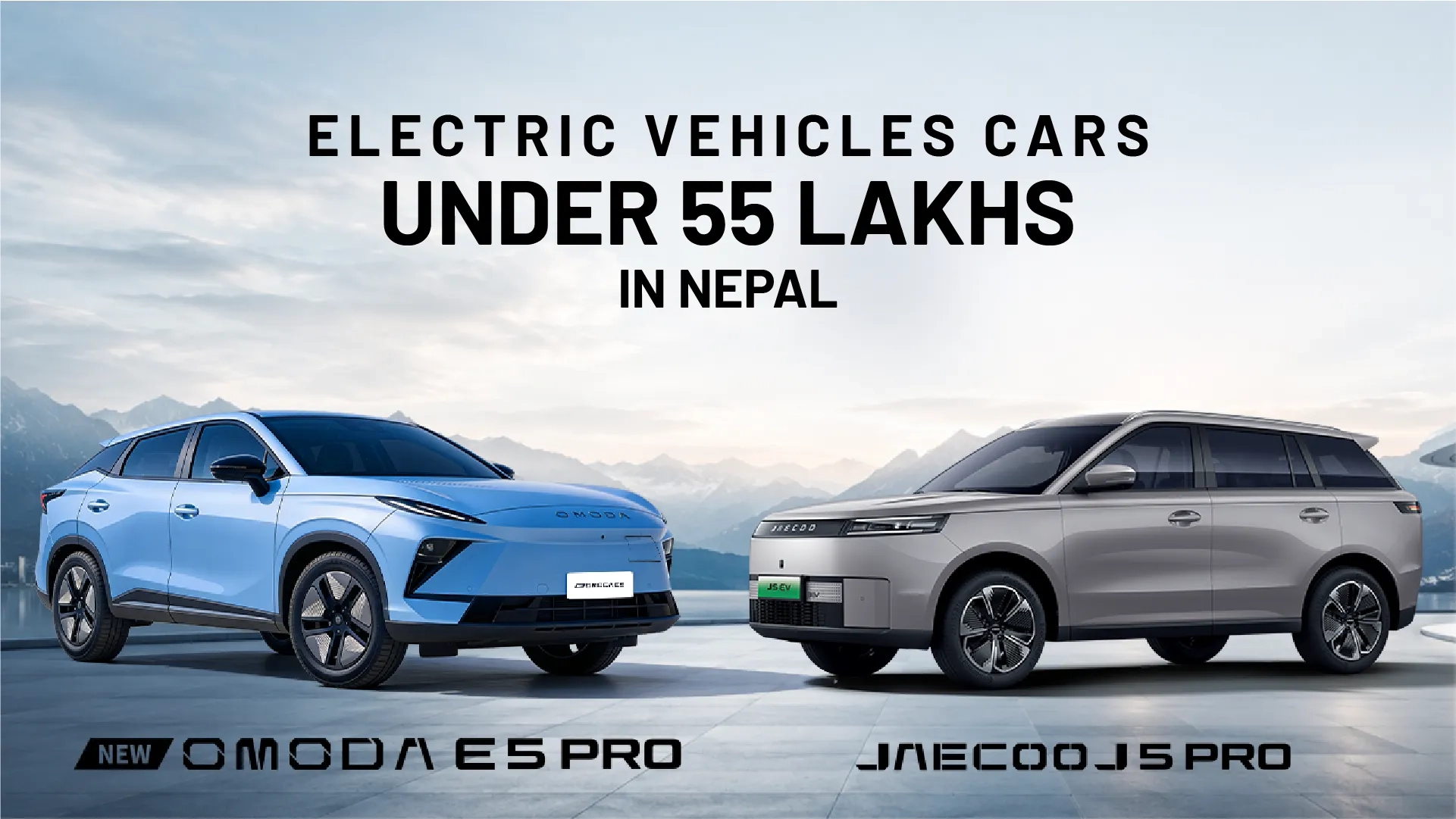
Our OMODA E5 Pro and JAECOO J5 Pro offer SUV practicality, advanced technology and safety features within this budget.
NPR 55 lakh is a maximum budget, not a target. The one EV that suits our everyday lifestyle is the right EV.
|
Model |
Price |
Battery |
Published Range |
Ground Clearance |
|
OMODA E5 Pro (Variant) |
NPR 51.99–52.39L |
50.7 kWh |
350 km WLTP |
191 mm |
|
JAECOO J5 Pro |
NPR 51.99L |
50.6 kWh |
405 km claimed |
185 mm |
Confirm Price prior to booking. Price check: September 2026. Our official Nepal price page.
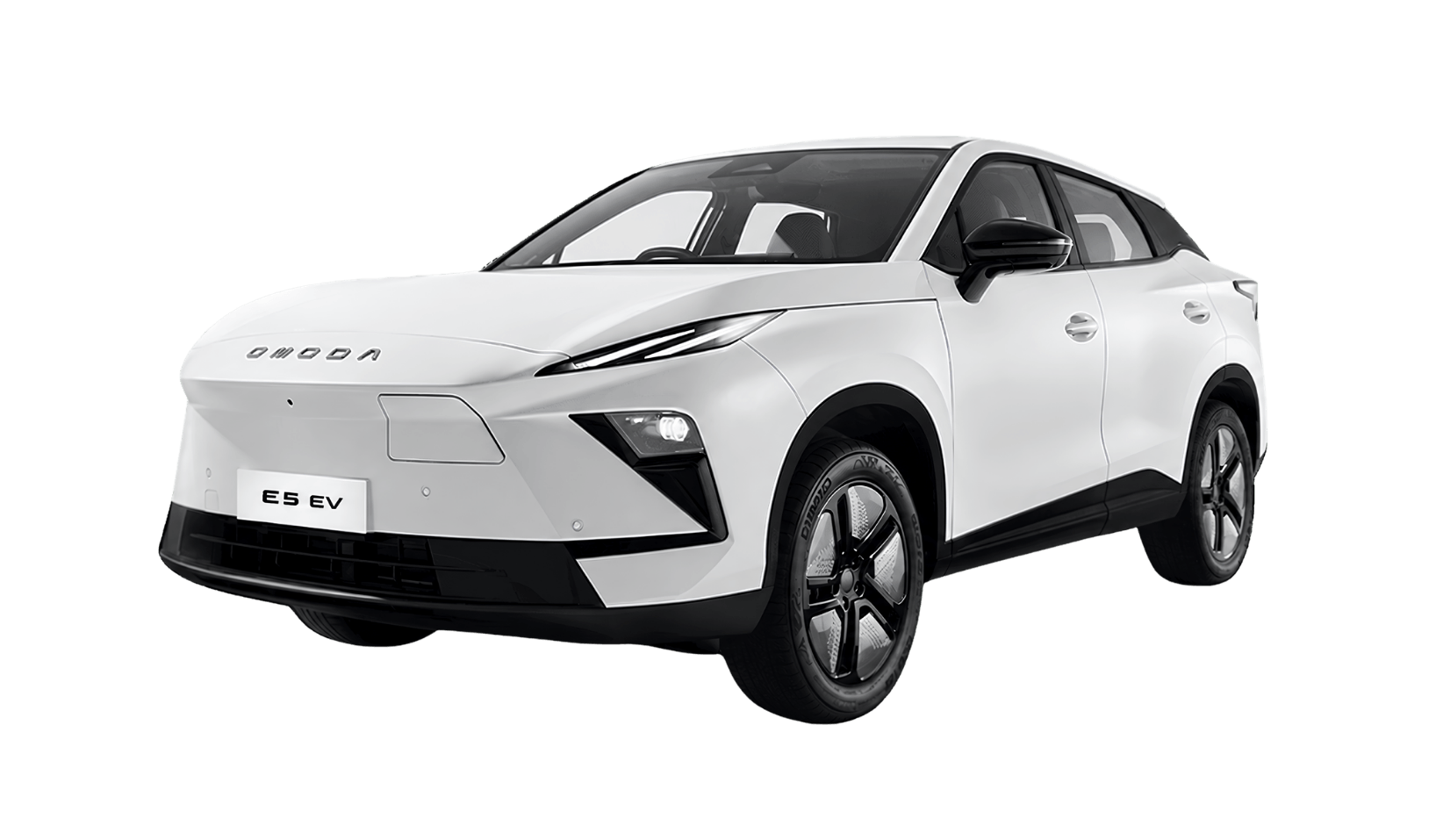
We priced the OMODA E5 Pro at NPR 51.99 lakh, with the Dual Tone version at NPR 52.39 lakh. It uses a 50.7 kWh LFP battery, offers a 350 km WLTP claimed range and provides 191 mm ground clearance.
What we think makes the E5 Pro interesting isn't one headline specification. It's how the features come together.
We offer 19+ ADAS functions, a 540° surround-view camera, 15.6-inch display, ventilated and massage seats, an electric tailgate and V2L, alongside the practicality of an electric SUV. Our current model information also lists 110 kW DC fast charging and 6.6 kW AC charging.
For us, that combination makes the E5 Pro particularly relevant to buyers who want technology, comfort and everyday SUV practicality without pushing beyond the NPR 55 lakh ceiling.
If you're considering the model more seriously, our OMODA E5 Pro price, range and ownership guide goes into the details.
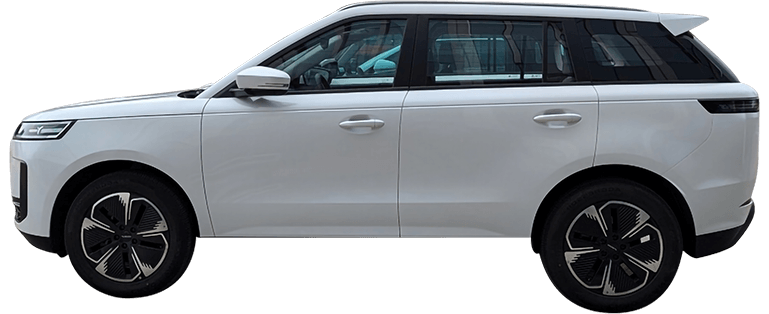
The JAECOO J5 Pro is currently listed at NPR 51.99 lakh. It uses a 50.6 kWh CATL LFP battery and has a 405 km claimed range, 185 mm maximum ground clearance, and 480 litres of boot space.
We designed the J5 Pro around a different kind of balance: family practicality, smooth electric performance, safety, and technology.
Our J5 Pro includes Level 2 driver assistance, a 540° panoramic-view system, six airbags, heated and ventilated front seats and two-zone air conditioning.
For buyers who want a family-oriented SUV without moving beyond the NPR 55 lakh budget, we believe the J5 Pro deserves a place on the shortlist.
The standard JAECOO J5 is currently listed at NPR 56.99 lakh, so we have not counted it as an under-55-lakh option.
You can explore the details in our JAECOO J5 Pro price, battery, range and ADAS guide.
The answer depends on how you allocate your budget.
As you move towards NPR 55 lakh, more SUV options enter the picture, with stronger combinations of cabin space, technology, safety and road practicality.
At this point, buyers can start looking beyond the price tag and focus on which features and capabilities best match their everyday needs.
At the higher end, larger battery packs are often designed to deliver longer driving ranges, making them better suited to extended journeys.
However, there is a crucial aspect of EV comparison that is often overlooked:
Don't assume that a costlier EV is a better value.
Those inexpensive extra lakhs may be better spent on features we use every day or simply be saved in our budgets.
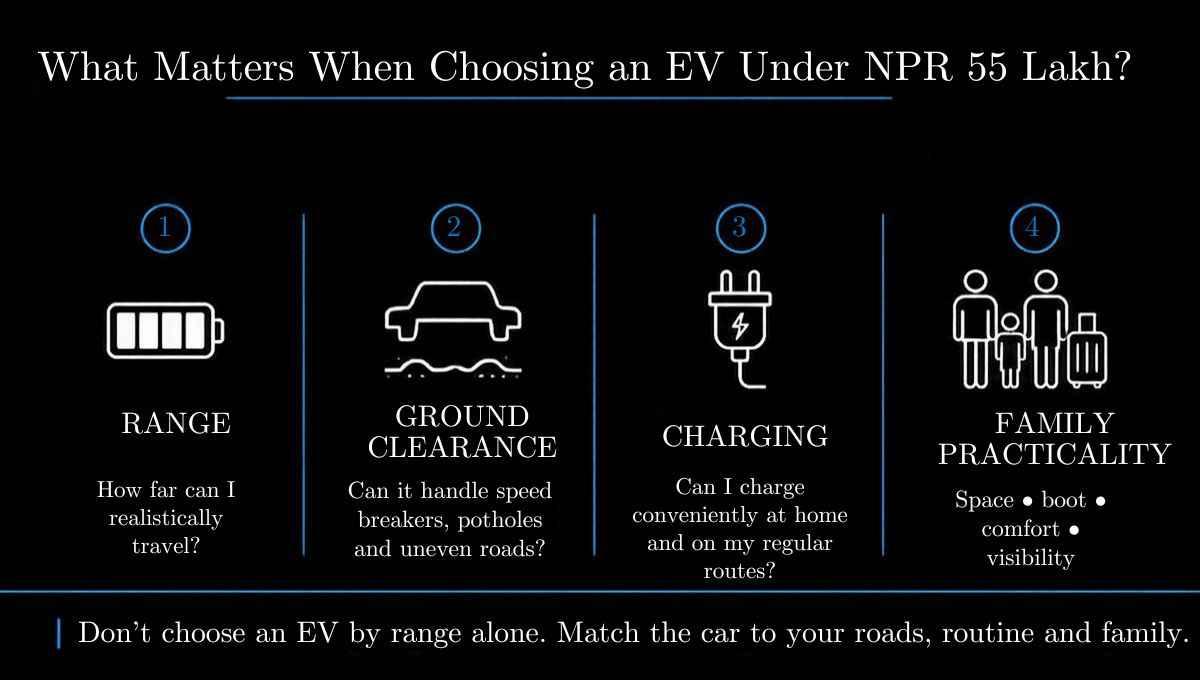
Range is usually the first specification we check. It's also one of the easiest to misunderstand.
A 350 km WLTP figure and a 401 km CLTC figure are not directly equivalent because the testing procedures are different.
The same applies when comparing WLTP with NEDC figures. These are laboratory test cycles, while actual driving is influenced by speed, traffic, elevation, weather, air-conditioning, passengers, luggage, and driving style.
So rather than asking:
Which EV has the biggest range?
we should ask:
How far do we normally drive, and where can we charge?
For a daily Kathmandu commute with convenient home charging, a 340–350 km WLTP EV may already provide plenty of flexibility.
For regular highway travel, battery capacity, charging speed, and charger availability have become more important.
Nepal's roads can make ground clearance more than a specification on a brochure.
Speed breakers, potholes, steep ramps, and uneven sections are easier to deal with when there is sensible clearance underneath the vehicle.
Our OMODA E5 Pro offers 191 mm, while the JAECOO J5 Pro offers 185 mm.
But clearance is only one part of the equation. Suspension, tyres, traction, braking and driving conditions also influence how confidently a vehicle handles difficult surfaces.
For a deeper explanation, read our guide on why ground clearance matters in an electric SUV in Nepal.
A large battery is useful, but convenient charging can matter even more.
If we have suitable parking and electrical access at home, overnight charging can cover much of our daily routine. For longer journeys, DC fast-charging availability becomes increasingly important.
Before buying, we recommend checking the charging options along the routes we actually travel.
Our guide to charging an EV at home in Nepal explains what buyers should consider.
If the EV is primary family vehicle, we should look beyond battery capacity.
Rear-seat comfort, boot space, visibility, seating position and ease of getting in and out can have a bigger impact on everyday ownership than another 20 or 30 kilometers of claimed range.
Not necessarily.
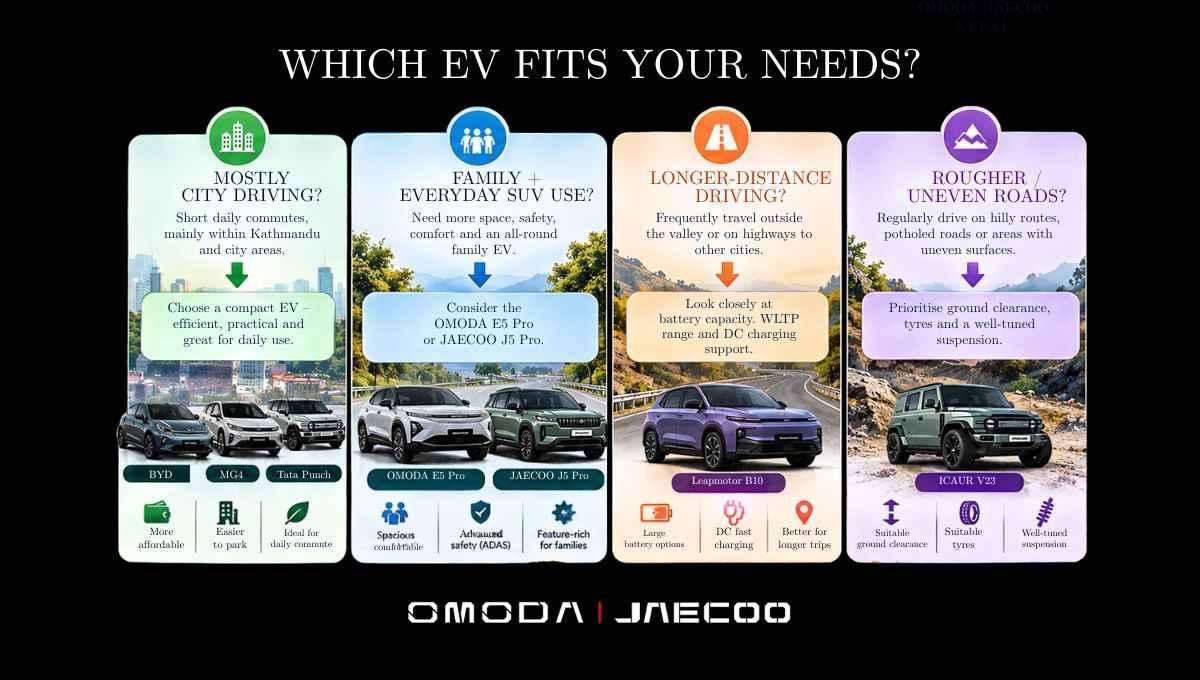
If the majority of our driving actually occurs in Kathmandu, and charging at home is convenient, we might already have a more affordable EV option.
When traveling outside the Valley, if you regularly take a family or have uneven roads, you might get a better return from the increased cost of battery capacity, cabin space, ground clearance, safety technology, and charging capacity.
Our approach is simple:
Determine our needs first. Then decide how much we need to spend.
Before booking any EV under NPR 55 lakh, we recommend checking:
Current variant and on-road price
Battery size and range test cycle
Home-charging feasibility
DC charging on regular routes
Ground clearance
Rear-seat and boot space
ADAS and safety equipment
Battery and vehicle warranty
Service and spare-parts support
Also, don't miss out on the test drive. A specification sheet will not tell us how naturally a car fits in our car seat or how it fits our family or daily routine.
For running-cost planning, see our guide to EV charging costs in Nepal.
For many commuters, yes. What matters more is our daily distance, charging access, traffic, road conditions, and driving habits.
Yes, particularly when driving over speed breakers, potholes, steep ramps, and uneven surfaces. But clearance should be considered together with tyres, suspension, and traction.
That depends on how we drive. Frequent long-distance travelers may benefit more from battery capacity, while urban users may value comfort, safety, technology and convenient charging more.
The electric cars under 55 lakh in Nepal market has become broad enough that we don't need to choose based on one impressive number.
We should look at the complete picture: how far we drive, where we charge, how many people we carry, what our roads are like, and which features we'll actually use.
For buyers looking for a technology-rich electric SUV within this budget, our OMODA E5 Pro brings together comfort, advanced driver assistance, practical clearance and a strong equipment package.
For those who want a balanced family-focused EV, our JAECOO J5 Pro combines SUV practicality with Level 2 driver assistance, comfort features and a 405 km claimed range.
The best way to make the final decision is to experience the difference for yourself.
Explore OMODA & JAECOO Nepal, compare our latest models and book a test drive. We'll help you find the EV that fits your roads, your passengers, and the way you actually drive.