Car price in Nepal 2026: Latest Prices, EV Costs & Buying Guide
October 12, 2026
Car price in Nepal 2026: Latest Prices, EV Costs & Buying Guide
October 12, 2026
Searching for the car price in Nepal is easy. Knowing which car actually makes sense for your budget is harder.
Nepal's new-car market now spans compact city cars, hatchbacks, family SUVs, hybrids, premium EVs, and luxury vehicles.
But a price list only tells you what a car costs. It does not tell you what your budget gets you, what you will spend after purchase, or which specifications matter for your driving needs.
This guide takes a more practical approach. We break down car prices in Nepal by budget, explain what changes as you move up the price ladder, look at EV ownership costs, and cover the questions you should answer before buying.
Price reference: October 2026. Vehicle prices, variants, offers and availability can change. Always confirm the current price and applicable charges with the authorised distributor before booking.
Key Takeaways
New-car prices in Nepal cover a wide range, from affordable compact EVs to premium vehicles costing several crores.
Budget checkpoints such as Rs 30, 40, 50, 60 and 80 lakh make the market easier to navigate.
EVs are available across several price bands, from compact city cars to premium electric SUVs.
Ex-showroom price is not the same as your final ownership cost.
A sensible purchase should consider safety, space, range, charging, running cost, warranty and after-sales support, not just the showroom price.
The right shortlist starts with your budget and driving needs, then narrows down by vehicle type and powertrain.
Quick Price Snapshot
If you are beginning your research, think of the Nepal car market in broad budget bands:
Under Rs 30 lakh: Compact city cars and entry-level EVs
Rs 30-40 lakh: Compact EVs and smaller SUVs
Rs 40-50 lakh: More EV and SUV choices
Rs 50-60 lakh: Premium compact EVs and better-equipped SUVs
Rs 60-80 lakh: Premium SUVs and higher-priced EVs
Above Rs 80 lakh: Premium and luxury vehicles
These are useful search and comparison points rather than strict market boundaries because prices and available variants change.
There is no single average car price in Nepal. The final price depends on the brand, model, variant, body style, powertrain, equipment and applicable taxes and charges.
Current Nepal listings demonstrate how broad the market has become.
That is why a car price list in Nepal is useful for discovering models, but less useful for deciding between them.
A better question is:
What does my budget actually get me?
The under-Rs 30 lakh segment is primarily focused on compact city cars and entry-level EVs.
At this budget, look closely at:
Safety equipment
Passenger capacity
Battery size and range for EVs
Charging access
Warranty
Service availability
Ease of driving and parking
If most of your driving is within the city, a compact car may be more practical than stretching your budget for a larger SUV.
The Rs 30–40 lakh range opens up more choice, particularly among compact EVs and smaller SUVs.
At this stage, don't compare electric car price in Nepal with petrol prices alone.
Look at the complete equation:
purchase price + range + charging + running cost + warranty + after-sales support
An EV that costs slightly more initially can have a different ownership equation from a similarly priced petrol car.
The Rs 40–50 lakh bracket gives buyers access to a wider selection of EVs, compact SUVs and other family-oriented vehicles.
This is also where specifications can vary significantly between models.
When comparing vehicles in this range, pay attention to:
Battery capacity
Claimed range and test cycle
DC fast-charging capability
Ground clearance
Passenger and boot space
Safety features
ADAS
Warranty
Service network
Don't choose based on the longest range or biggest screen alone. Think about what you will actually use.
The Rs 50–60 lakh segment is particularly relevant for buyers considering premium compact EVs and better-equipped SUVs.
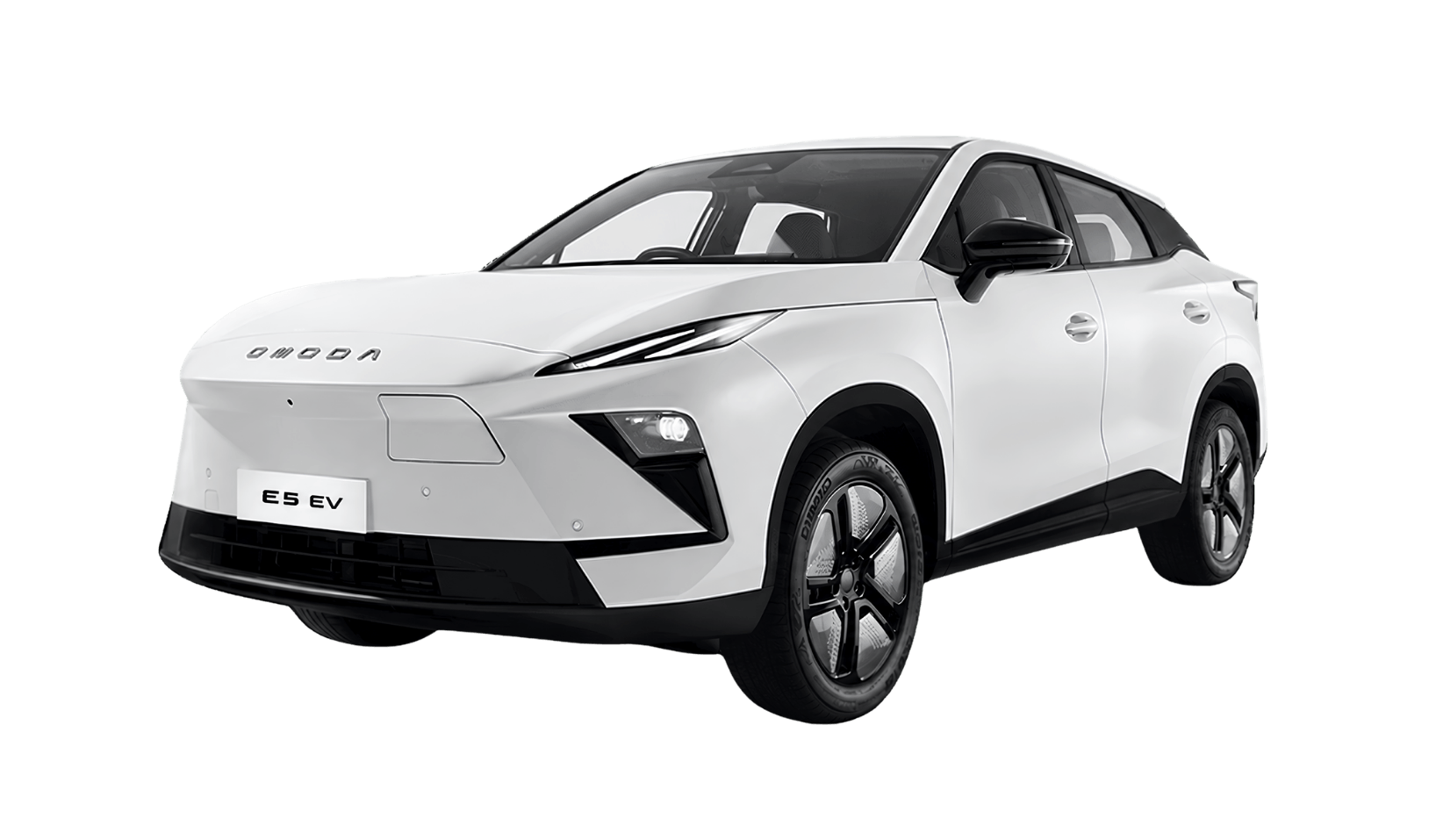
For OMODA & JAECOO, the current official Nepal price page lists:
|
Model |
Current listed price |
|
OMODA E5 Pro Single Tone |
NPR 51.99 lakh |
|
OMODA E5 Pro Dual Tone |
NPR 52.39 lakh |
|
OMODA E5 |
NPR 56.99 lakh |
|
OMODA E5 Dual Tone |
NPR 57.39 lakh |
|
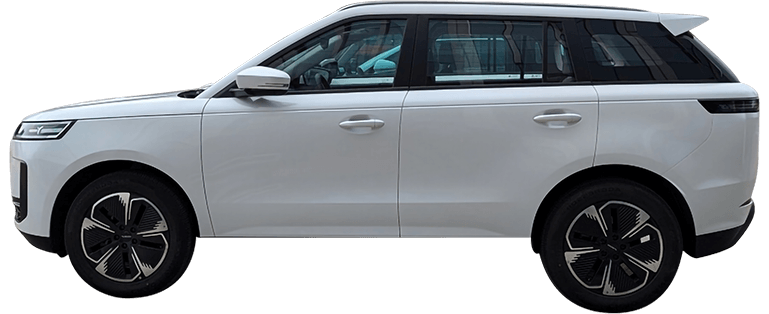
JAECOO J5 Pro |
NPR 51.99 lakh |
|
JAECOO J5 FWD |
NPR 56.99 lakh |
These are the prices currently displayed on the official OMODA & JAECOO Nepal price page.
If you're comparing the OMODA E5 Pro with the JAECOO J5, remember that they are different models with different specifications and positioning. Our OMODA E5 Pro vs JAECOO J5 comparison guide covers their battery, range, performance, comfort and technology in greater detail.
For the JAECOO J5 Pro, check the exact variant specification rather than assuming that figures published for the JAECOO J5 automatically apply to the Pro variant.
That distinction is important when comparing car prices in Nepal, because two similarly named variants can have different equipment and pricing.
Once your budget reaches Rs 60–80 lakh, the market moves further into premium SUVs and higher-priced EVs.
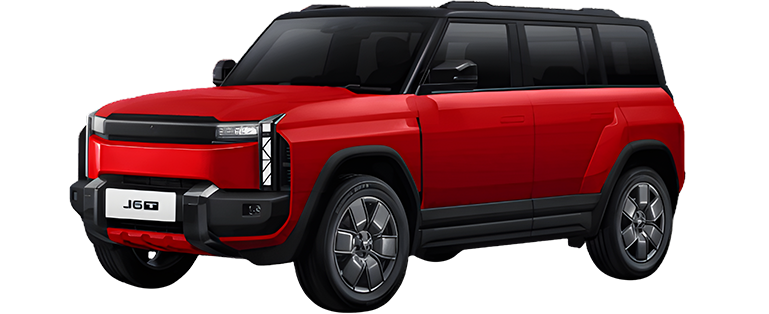
The current official OMODA & JAECOO Nepal price page lists the JAECOO J6T at NPR 71.99 lakh.
At this level, the question becomes less about simply getting a bigger or more expensive vehicle and more about what additional capability you actually need.
Consider:
Longer driving range
Larger cabin or boot
Higher ground clearance
Stronger performance
Additional safety technology
More comfort and convenience
Capability on demanding roads
A higher price makes more sense when the additional capability matches your actual use.
Two cars with similar showroom prices can have very different ownership costs.
For EV buyers, the important factors include battery capacity, charging speed, home-charging access, electricity cost, range and battery warranty.
For petrol or hybrid buyers, fuel economy, servicing, fuel availability and maintenance requirements become more important.
EV ownership can offer lower energy and routine maintenance costs, although the actual saving depends on how much you drive, your electricity tariff and where you charge.
Our EV charging cost guide for Nepal explains the difference between home, public and private charging costs and shows how charging expenses can vary by charging method.
So instead of asking only:
“What is the EV price in Nepal?”
ask:
“Which powertrain gives me the most practical ownership cost for the way I drive?”
One of the most important things to understand when comparing new car prices in Nepal is that the advertised ex-showroom price may not be your final payable amount.
Depending on the vehicle and purchase arrangement, you may also need to account for:
Vehicle registration
Insurance
Applicable taxes or road-related charges
Financing and processing fees
Accessories or optional equipment
Before booking, ask the dealer for the complete on-road price.
This prevents two vehicles with similar advertised prices from appearing cheaper or more expensive simply because additional costs have not been included consistently.
Once you have narrowed down the car price in Nepal to a comfortable range, move beyond the price tag.
A Kathmandu commuter has different needs from someone regularly driving highways, hills or rougher roads.
Consider ground clearance, tyres, vehicle dimensions and drivetrain alongside price.
For an EV, consider home charging, public charging and your average daily distance.
For petrol or hybrid vehicles, calculate expected fuel consumption and servicing.
An EV's rated range is a comparison figure, not a guarantee of exactly how far you will travel.
Speed, traffic, gradients, load, weather, air-conditioning, tyre condition and driving style can all affect actual consumption.
For Nepal, think about your real route and charging opportunities, not just the brochure number.
Look at airbags, ADAS, braking systems, visibility, rear-seat space and boot capacity.
A feature is useful only if it contributes to how you and your passengers actually use the car.
Warranty coverage, service availability and spare-parts support matter throughout ownership.
A lower purchase price is less attractive if maintaining the vehicle becomes difficult later.
A specification sheet cannot tell you everything.
Check the seating position, visibility, ride comfort, steering, braking, cabin space and how the vehicle feels on the roads you normally drive.
Your car price in Nepal should also fit your monthly budget.
For example, if you purchase a Rs 50 lakh vehicle and finance 60% of its price, the financed amount would be Rs 30 lakh. The remaining Rs 20 lakh would be your contribution before other applicable costs.
However, the actual EMI depends on the lender, interest rate, loan tenure, down payment and eligibility.
Our EV financing and EMI guide explains the factors that can affect an EV financing decision. Use it as a starting point, then confirm the current loan terms directly with your bank or lender.
Instead of asking:
“Which car is cheapest?”
ask:
“Which car gives me the right combination of purchase price, capability and ownership cost?”
A slightly more expensive car may make sense if it gives you the safety, space, range or road capability you actually need.
Equally, paying more for features you rarely use may not improve your ownership experience.
That is why we recommend comparing the complete ownership picture, not just the showroom number.
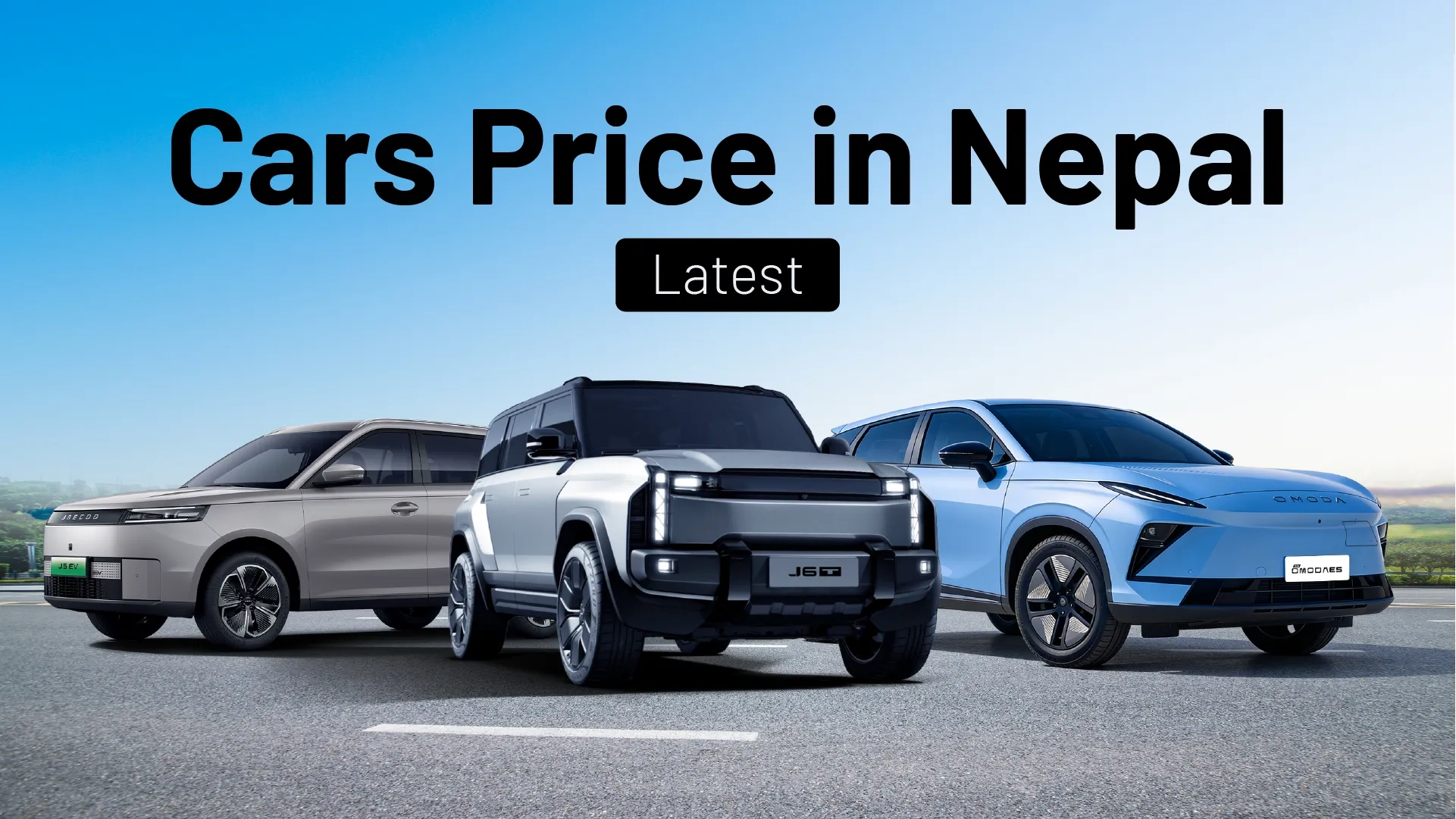
If OMODA or JAECOO is on your shortlist, check the latest OMODA & JAECOO prices in Nepal and compare the available models against your budget and driving needs.
New-car prices in Nepal vary widely according to the brand, model, body style, powertrain and variant. Current listings range from affordable entry-level EVs to premium vehicles costing several crores.
A Rs 50 lakh budget can open up several EVs, compact SUVs and other passenger vehicles. The right choice depends on whether you prioritise range, space, safety, performance, running costs or road capability.
Electric car prices range from compact city EVs to premium electric SUVs costing well above Rs 1 crore. Prices vary by model, battery, equipment, variant and distributor.
It can be, particularly if you have convenient home or public charging. Compare the purchase price with charging costs, range, maintenance, warranty and service support before deciding.
The ex-showroom price is the advertised vehicle price. Your final on-road cost can include registration, insurance and other applicable purchase-related costs. Always ask for the final payable amount before booking.
Start with your total budget and driving needs. Then compare safety, space, performance, ground clearance, fuel or charging costs, warranty, service support and the final on-road price.
The car price in Nepal tells you what a vehicle costs. It doesn't tell you whether that vehicle makes sense for your daily life.
Start with your budget, narrow your choices by vehicle type and powertrain, then compare what matters after purchase: safety, space, range, charging, running cost and after-sales support.
If you're considering an OMODA or JAECOO EV, check the latest prices, explore our EV buying and ownership guides, and book a test drive before making your final decision.
Last updated: October 2026. Prices, specifications, offers and availability may change. Confirm the current variant, price and applicable charges with the authorized distributor before purchase.