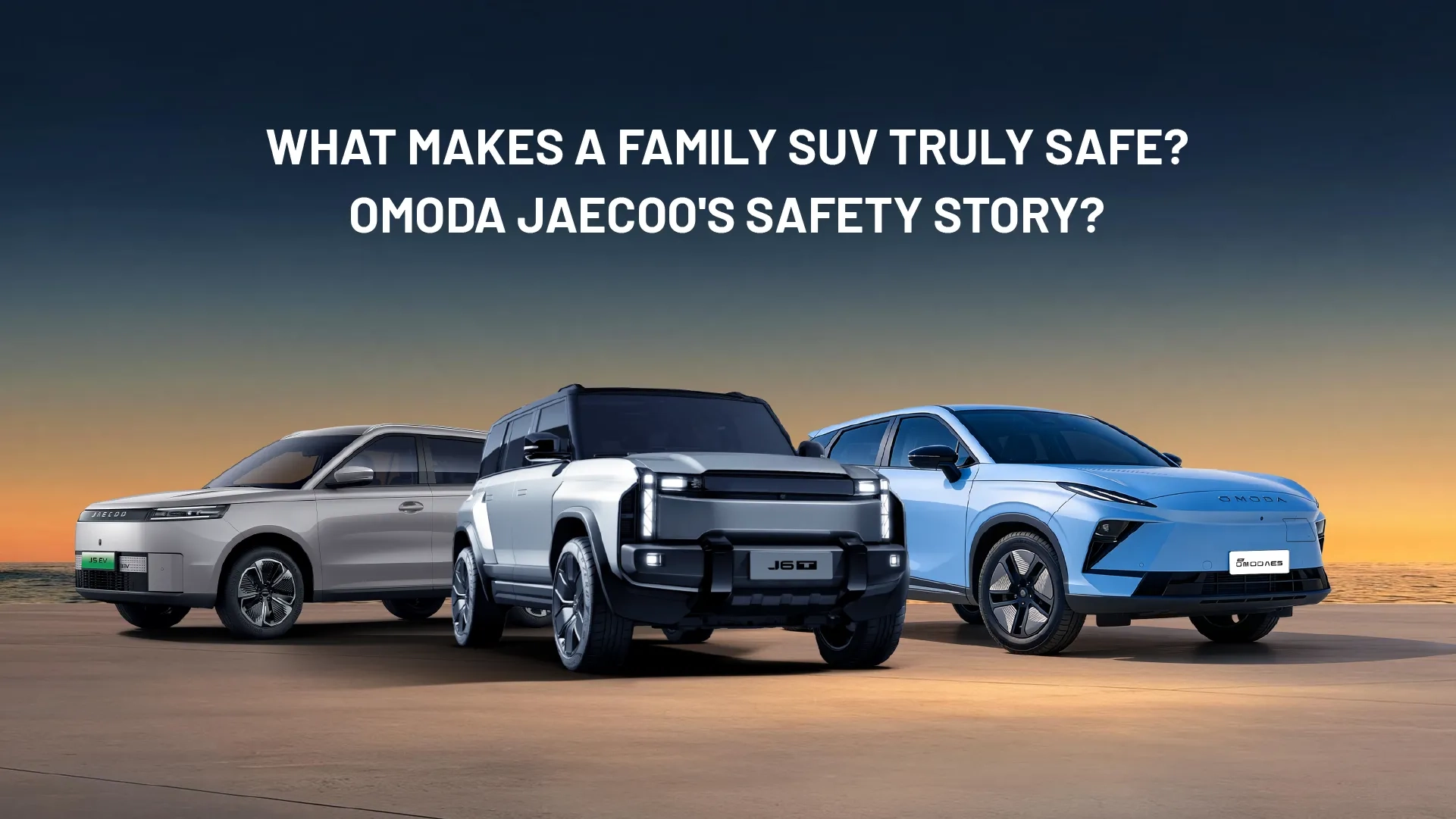
What Makes a Family SUV Truly Safe? Omoda Jaecoo's Safety Story?
September 18, 2026
What Makes a Family SUV Truly Safe? Omoda Jaecoo's Safety Story?
September 18, 2026
A safe family SUV is a structure, occupant protection and driver assistance.
The OMODA 5 and its BEV variant have achieved 5-star Euro NCAP ratings. Ratings apply to tested models and specifications.
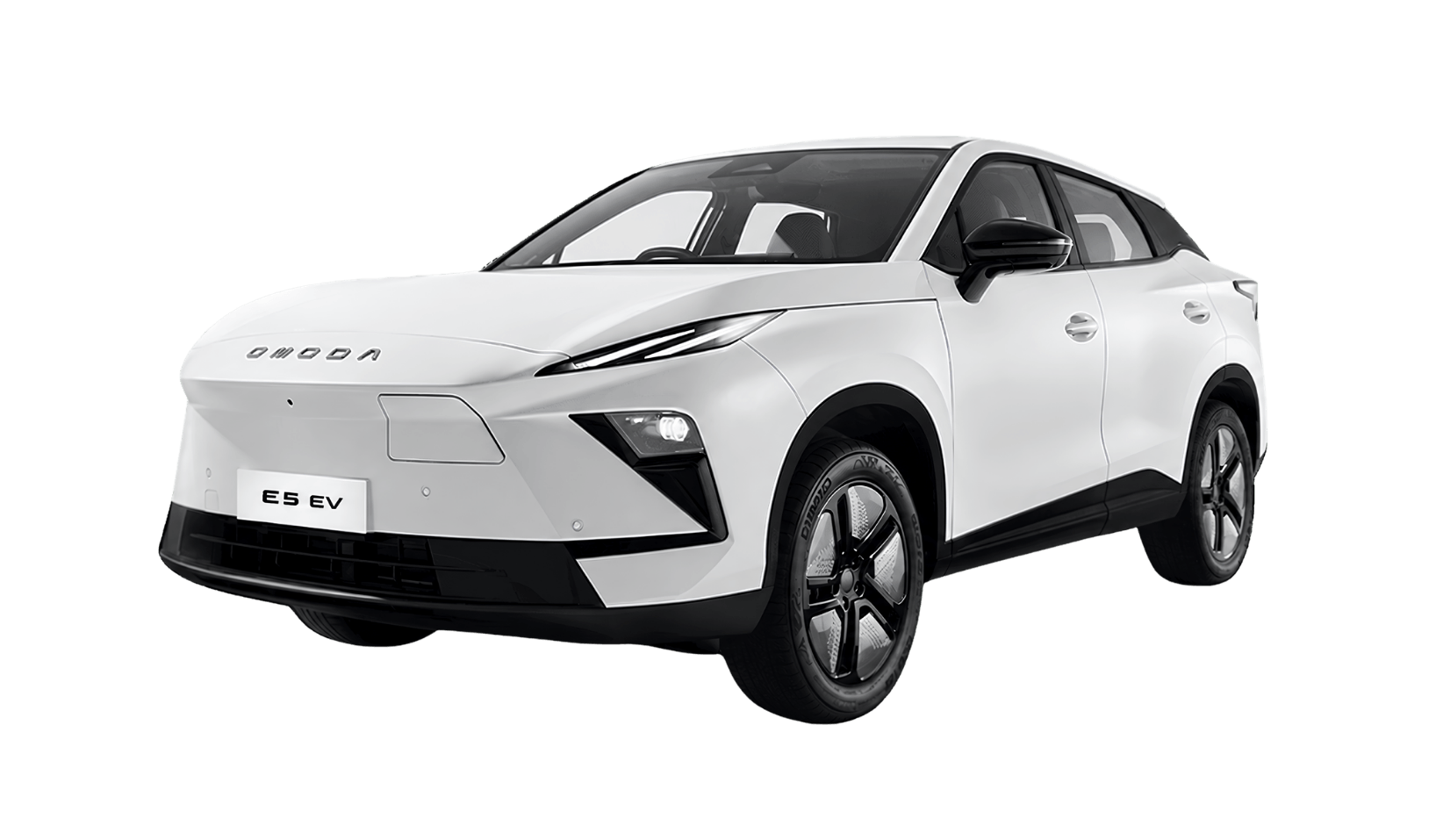
OMODA E5 Pro offers 19 ADAS systems, 191 mm ground clearance, and a 50.7 kWh LFP battery.
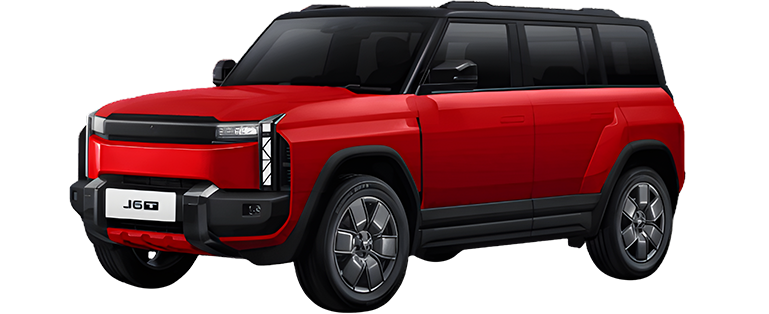
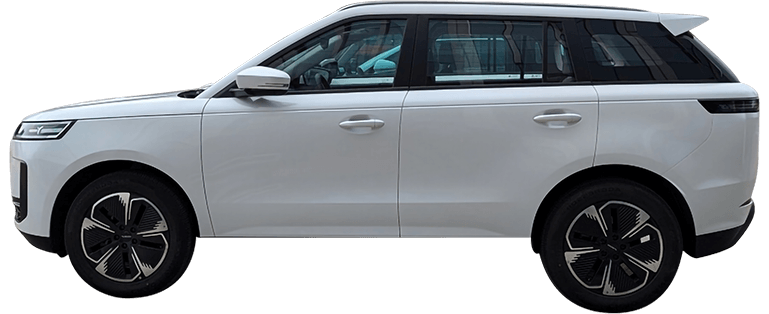
JAECOO J5 and J6T offer 185 mm and 225 mm ground clearance respectively, catering to different road conditions in Nepal.
The battery and motor are covered by up to 11 years' warranty for eligible OMODA & JAECOO EVs (terms, conditions and limits apply).
For families looking for a safe family SUV in Nepal, the answer is not simply the number of airbags or ADAS features.
Safety doesn't always depend on just one spec when it comes to SUVs. Parents would like to know how the car performs in Kathmandu traffic, how confident they can be on a highway drive to Pokhara and how it would perform in the rough roads around Chitwan, Butwal or Dharan.
Understanding the most important SUV safety features helps families compare models based on protection rather than equipment count.
What makes a safe family SUV in Nepal?
We see family SUV safety through three core layers: structure, restraint and active assistance, while EV battery technology and long-term ownership support add further considerations.
When we talk about family SUV safety in Nepal, we address it at three practical levels – structure, restraint, and active assistance.
A vehicle's body is the basis for crash protection. The OMODA 5/E5's global information refers to a body structure that has been made with 78% high strength steel and is based on a protective passenger-cell concept.
The aim is not just to tighten the car up to make it feel as solid as a rock. Structural engineering should be designed to absorb impact forces and to safeguard passenger compartments.
The second layer includes seat belts, airbags, pretensioning systems, and ISOFIX child-seat anchors.
Families are particularly concerned with ISOFIX, as ISOFIX child seats can be fitted to dedicated child seat mounting points, as well as the vehicle seat belt system. Restraint equipment may differ depending on the model and market and we recommend confirming the specification of the Nepal market for the vehicle in question.
The third layer is "Advanced Driver Assistance Systems" (ADAS).
Technologies such as Forward Collision Warning, Automatic Emergency Braking, Blind Spot Detection, Adaptive Cruise Control and lane-assistance functions can provide additional awareness and assistance in certain driving situations.
The key difference is that ADAS assists the driver and doesn't replace the driver.
Our Guide to 19+ ADAS Features and What They Do provides a real-world understanding of the technology for Nepali roads.
When a manufacturer does not provide a list of equipment, an independent crash test can be helpful.
The OMODA 5 achieved a 5-star Euro NCAP rating, and Euro NCAP confirmed that the battery-electric variant tested in 2022 also receives the 5-star rating.
These are model-specific test results. The five-star rating should not be used as a blanket rating for all OMODA or JAECOO vehicles sold in Nepal.
This is an important distinction because specifications, variants, and test protocols may vary. Better questions for the buyers are: what kind of safety equipment and what specification is offered by the specific Nepal model?
Passive safety comes into play after an accident.
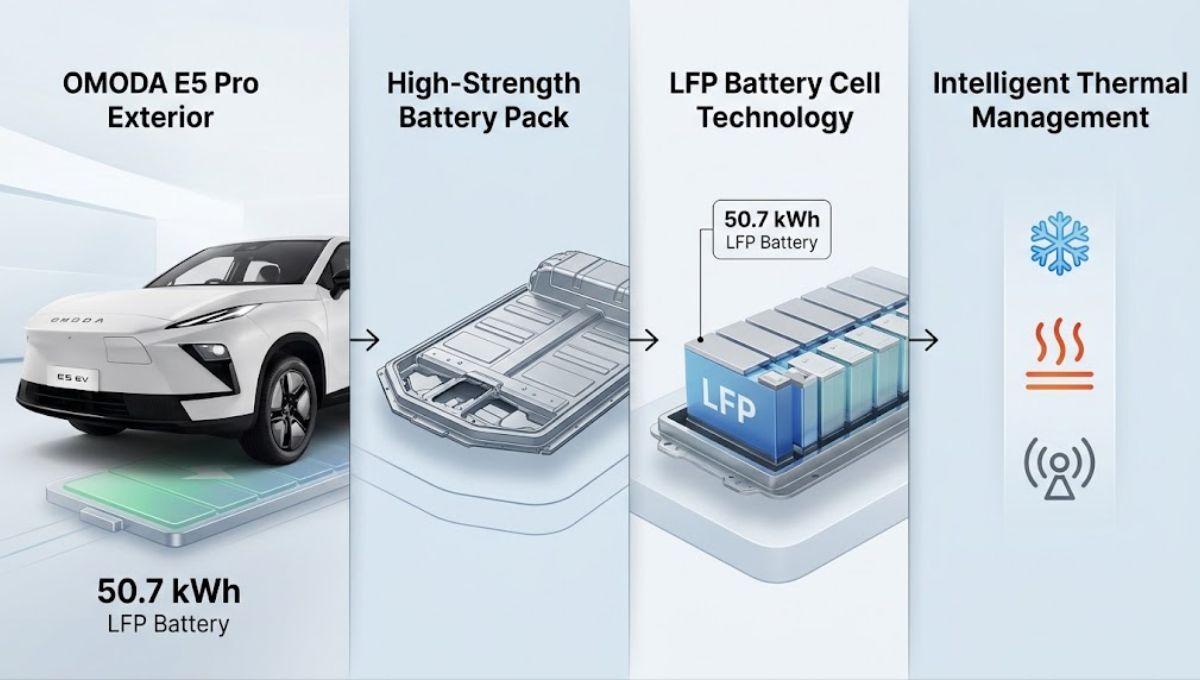
The body structure serves as the framework and restraints like seat belts and air bags to control occupant movement. ISOFIX offers another useful feature for traveling to families with young kids.
The high-voltage battery is another important component for an electric SUV.
The OMODA E5 Pro uses a 50.7 kWh LFP battery, while the JAECOO J5 uses a 58.9 kWh CATL LFP battery.
The lithium iron phosphate (LFP) battery is typically considered a thermally stable variation of some lithium-ion battery types. But chemistry is not the only factor in battery safety. The overall safety of an EV depends on how it is constructed, how the batteries are monitored, how the batteries are kept cool, how it is physically protected, and how it is properly serviced.
Our OMODA E5 Pro full specifications guide covers the battery, range, dimensions, clearance and safety technology together.
The significance of ADAS is more evident if we stop focusing on the number of features it can provide.
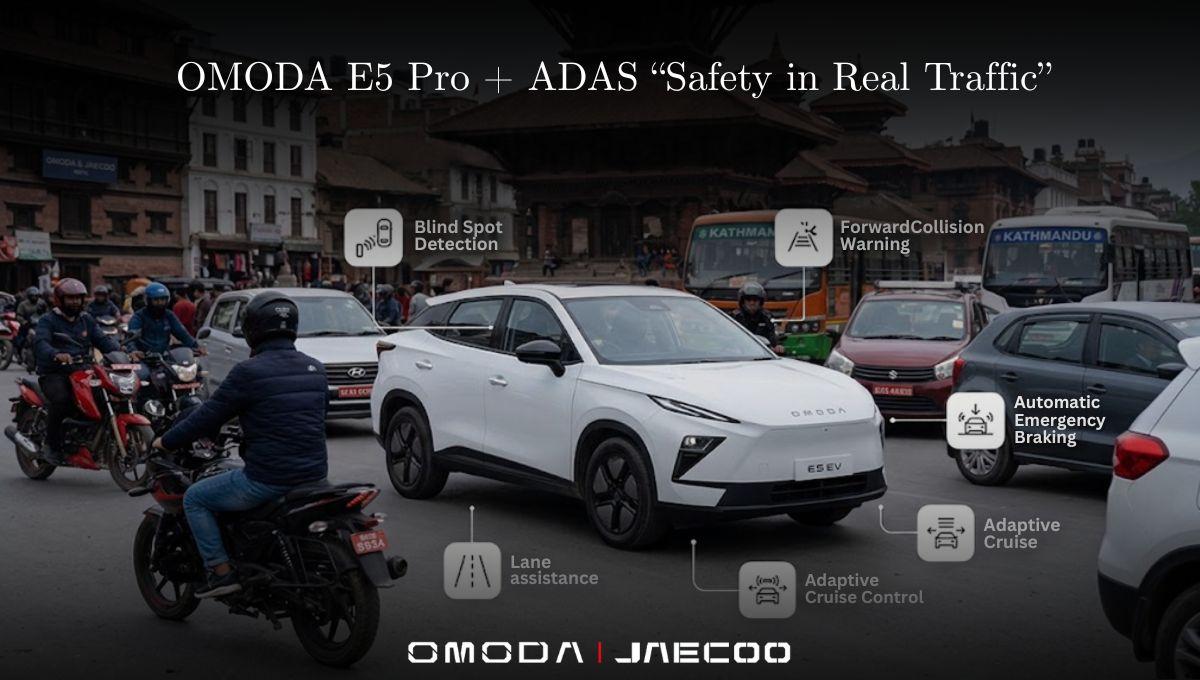
The OMODA E5 Pro has 19 ADAS systems on its current Nepal model page. These include LDW, LDP, BSD, FCW, AEB, DAI, ACC and TJA, alongside other driver-assistance technologies.
The JAECOO J6T also lists LDW, LDP, BSD, FCW, AEB, DAI, ACC and TJA.
In the real driving environment, various systems come into play in various circumstances.
Blind Spot Detection, Forward Collision Warning, Automatic Emergency Braking and camera systems might be helpful in dense traffic in Kathmandu.
Adaptive Cruise Control and lane-assistance technologies can aid driver workload reduction on appropriate stretches of the highway between Kathmandu and Pokhara.
Intelligent ground clearance, braking support, and good visibility all come in handy around Chitwan, where a blend of urban, highway, and rough-road driving conditions exist.
In Butwal and Dharan, where driving can switch between urban roads and hill approach, clearance/stability and driver assistance are noticed to be helpful parameters.
For most of the population in Biratnagar, where most driving takes place in an urban setting, cameras, blind-spot monitoring, and braking assistance and visibility may be more relevant.
However, ADAS has its own drawbacks. System performance can be impacted by road markings, weather, visibility, and traffic behavior. The driver retains control of the vehicle.
Ground clearance is not synonymous with crash safety, but it can play a part in the road-going practicality and underbody protection.
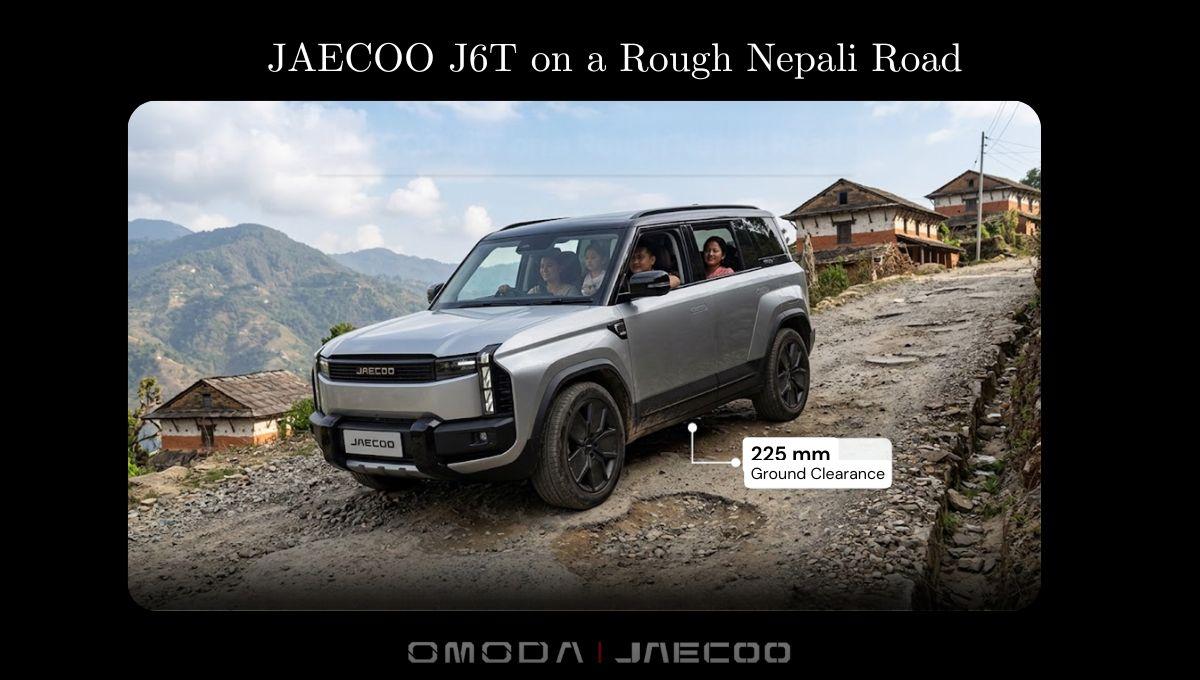
The quality of the Nepali roads may contain potholes, speed breakers, steep ramps, broken edges and rough surfaces, especially after and during monsoon.
The OMODA E5 Pro provides 191 mm of ground clearance. The JAECOO J5 is 185 mm and the JAECOO J6T is 225 mm.
A higher clearance may help minimize the risk of underbody contact when driving over rough surfaces, but it does not necessarily make an SUV safer. Other factors to consider include tyres, braking, suspension, stability systems, visibility, and driving behavior.
We have provided you an overview of the ground clearance of electric SUVs in Nepal, highlighting the importance of choosing the correct ground clearance depending on the driving conditions and areas.
The current official Nepal pricing page includes the following model and variants:
|
Model |
Current listed price |
Practical safety consideration |
|
OMODA E5 Pro |
NPR 51.59 lakh |
191 mm clearance, 19 ADAS systems |
|
OMODA E5 Pro Dual Tone |
NPR 51.99 lakh |
The dual-tone variant of the same model is available. |
|
OMODA E5 |
NPR 56.99 lakh |
EV safety and driver-assistance technology |
|
OMODA E5 Dual Tone |
NPR 57.39 lakh |
Dual-tone variant |
|
JAECOO J5 Pro |
NPR 51.59 lakh* |
The 185 mm clearance and ADAS package provide extra value for safety. |
|
JAECOO J5 FWD |
NPR 56.99 lakh |
185 mm clearance, 19+ ADAS |
|
JAECOO J6T |
NPR 69.99 lakh |
Equipped with 225 mm clearance and an ADAS suite. |
The current price of The JAECOO J5 Pro is mentioned on its official pricing page on NPR 51.59 lakh, and current promotional schemes might differ. Please check the current price and variant prior to booking.
For a more detailed buyer comparison, our OMODA E5 Pro vs JAECOO J5 guide compares price, battery, range, power, clearance and ADAS.
You can also make a comparison between the JAECOO J5 and J6T specifications when choosing between everyday family use and increased rough road usage.
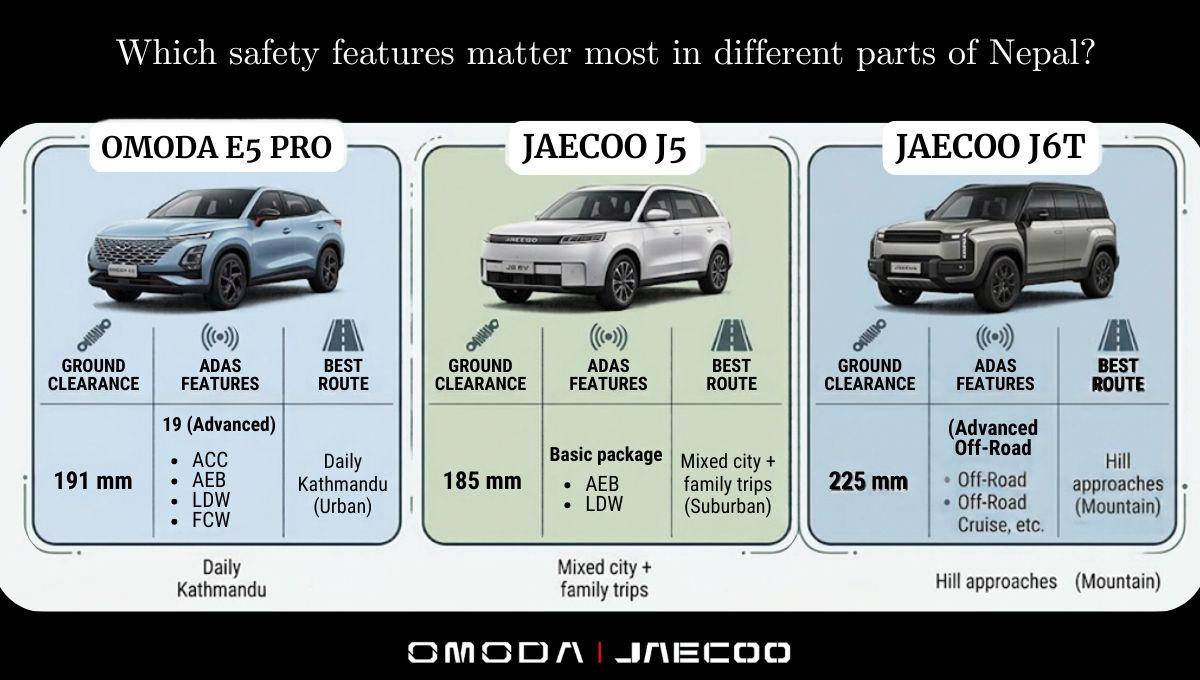
Ultimately, the safest family SUV in Nepal is one that is suitable for the actual driving conditions in which the family operates.
|
Location / route |
Useful safety considerations |
|
Kathmandu |
AEB, FCW, BSD, cameras and visibility |
|
Kathmandu–Pokhara |
ACC, FCW, lane assistance and stability |
|
Chitwan |
Clearance, visibility and braking assistance |
|
Butwal |
Clearance, stability and driver assistance |
|
Dharan |
Clearance, visibility and hill-road control |
|
Biratnagar |
Cameras, BSD, AEB and urban awareness |
That's why a buyer spending most of the week in Kathmandu might consider the features of ADAS and parking visibility more important, whereas a regular driver traversing rougher roads might care more about ground clearance and vehicle capability.
Our family electric SUV guide for Nepal explores those buying considerations in more detail.
Warranty doesn't improve SUV safety in crash but can help enhance confidence in ownership over time.
The extended programme boosts eligible battery coverage to 11 years or 240,000 km and drive-motor coverage to 11 years or 200,000 km, whichever is reached first, with SPG Automobiles. The original manufacturer's coverage is eight years/180,000 km for the battery and eight years/160,000 km for the motor.
The programme is subject to eligibility and its terms and conditions. Not an accident insurance and not an alternative to vehicle insurance.
Our detailed 11-year extended warranty guide explains the difference between the standard warranty, extended warranty and insurance.
Ultimately, choosing a safe family SUV in Nepal means matching safety technology and practical capability to the roads your family uses.
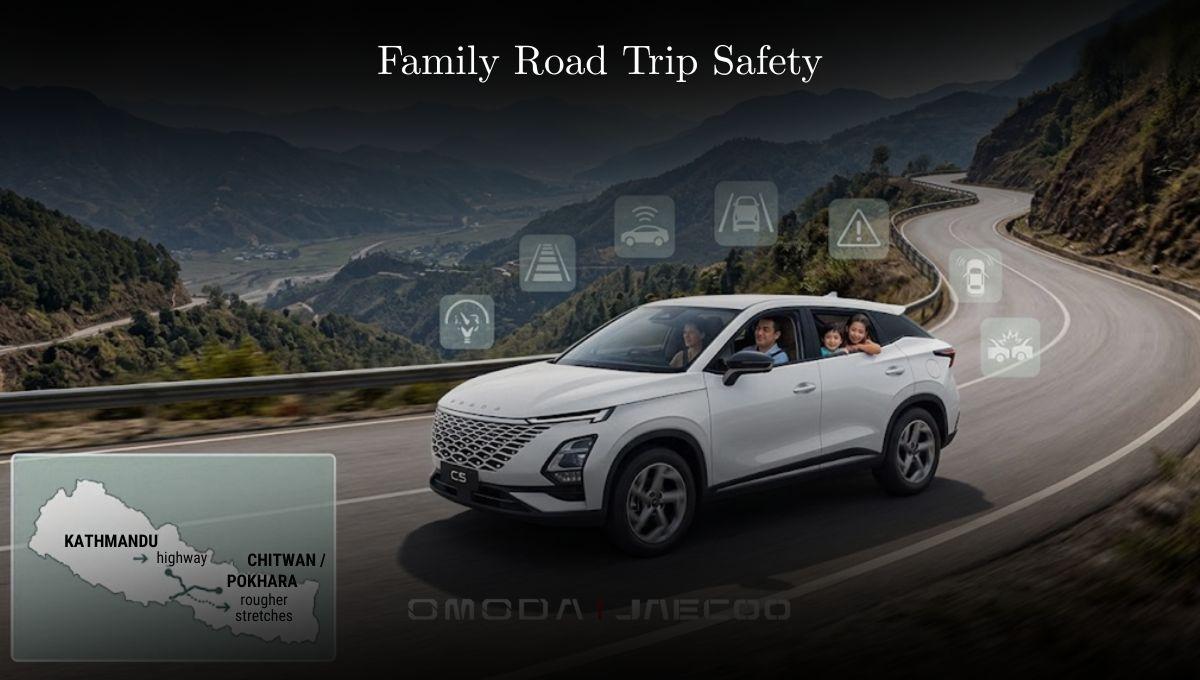
When considering a safe family SUV to buy, don't focus on just one statistic.
Prior to looking at the interior, check the structure and crash-protection systems. Next, think of airbags, seat belts, and ISOFIX. Know the function of the ADAS systems instead of just the number of systems.
When it comes to Nepal, add Ground clearance, tyres, braking, stability systems and visibility to the list. Additionally, battery technology and long-term battery and motor support should be considered for an EV.
Most of all, make sure you match the vehicle with your family's specific schedule.
Features such as collision avoidance, blind-spot awareness, and parking visibility are important for a commuter in Kathmandu. If a family drives regularly to Pokhara or Chitwan, they will be more likely to consider highway assistance, clearance, and range. The JAECOO J6T's all-wheel drive and more rugged specification could prove appealing to a buyer who often drives on rougher roads.
For us, what makes a family SUV safe is the combination of protection layers, technology and practical engineering designed for the roads people actually drive in Nepal.
A safe family SUV should offer structural protection, occupant restraints like airbags and ISOFIX, active safety equipment like AEB and FCW, and practical features such as adequate ground clearance and visibility.
Certain models have been tested and gained 5-star results. The OMODA 5 and its BEV variant have five-star Euro NCAP ratings, while the JAECOO 7 PHEV achieved five stars in 2025. These ratings apply to the models and specifications tested.
ISOFIX provides dedicated mounting points for compatible child seats, making installation more secure and reducing the risk of incorrect fitting.
There are currently 19 ADAS systems listed in the current Nepal model page, such as LDW, LDP, BSD, FCW, AEB, DAI, ACC and TJA.
The J6T comes with driver-assistance equipment from LDW, LDP, BSD, FCW, AEB, DAI, ACC, and TJA.
LFP is usually recognized for its thermal stability, but EV battery safety requires the proper engineering of the battery pack, monitoring, thermal management, physical protection, and proper servicing.
It depends on the route. The OMODA E5 Pro comes with 191 mm clearance plus 19 ADAS systems for daily driving, the JAECOO J5 will be slightly lower at 185 mm clearance with a longer stated range while the J6T will have the most clearance at 225 mm for those who regularly drive on less than optimal road surfaces.