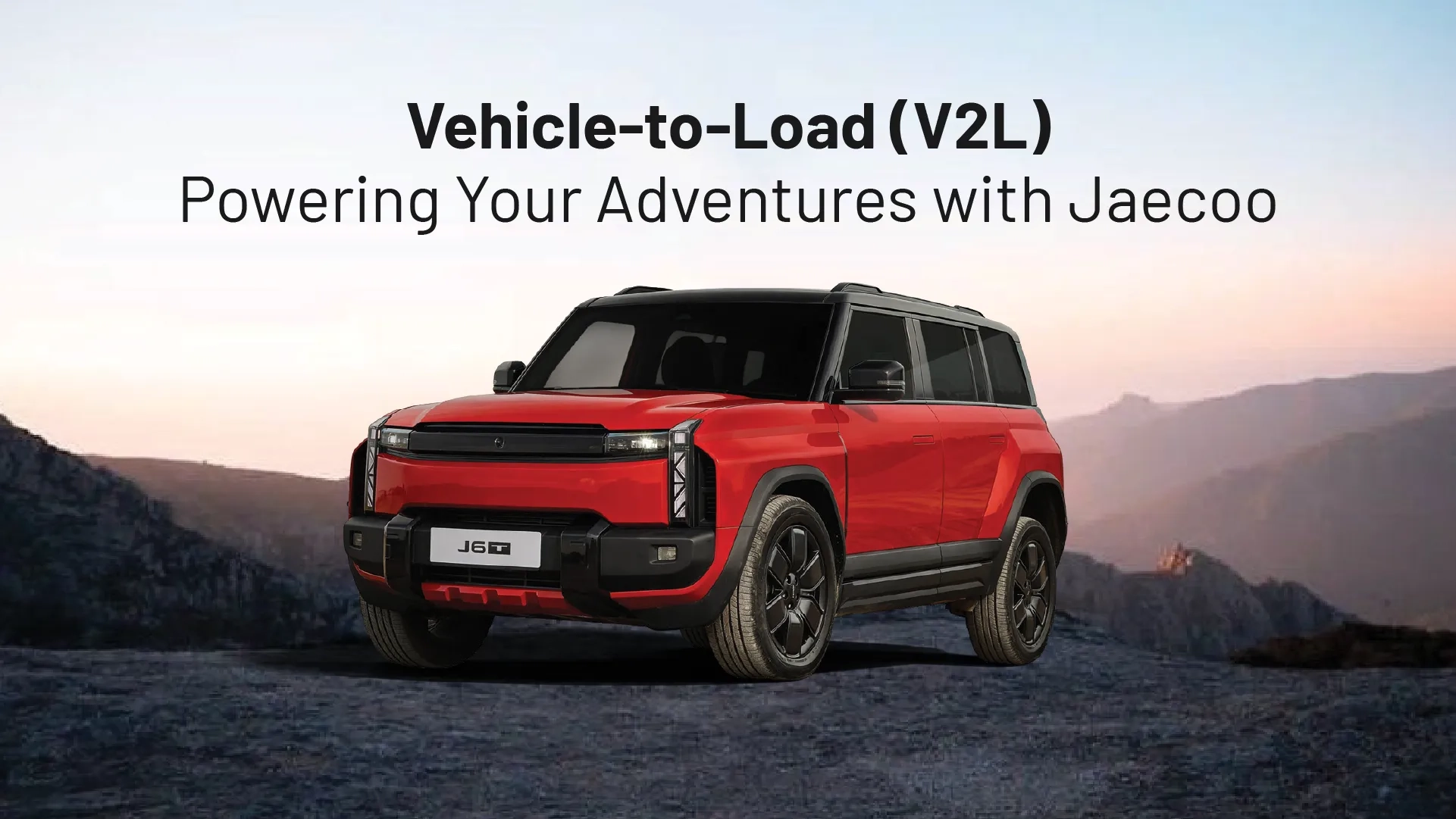
Vehicle-to-Load (V2L): Powering Your Adventures with Jaecoo
September 18, 2026
Vehicle-to-Load (V2L): Powering Your Adventures with Jaecoo
September 18, 2026
Jaecoo V2L provides up to 3.3 kW AC power for compatible devices.
Both JAECOO J5 and J6T support V2L for camping, road trips, tools and selected backup needs.
Actual runtime depends on battery charge and appliance demand; 3.3 kW is the maximum output.
Use the correct V2L adapter, stay within the power limit, and never back-feed household wiring.
V2L uses battery energy, so it can reduce the energy available for driving.
An electric SUV can do more than take us from one destination to another.
With Jaecoo V2L, the energy stored in the vehicle can also provide AC power for compatible electrical devices. That means our vehicle can become a practical portable power source when we are camping, taking a road trip, working outdoors, or dealing with a temporary power interruption.
For drivers in Nepal, that extra flexibility can be useful. We can use suitable appliances at a campsite, keep essential devices powered during a trip, run compatible light-duty equipment at an outdoor worksite or power selected devices during a blackout. The important point is to stay within the vehicle’s electrical limits and use the correct V2L equipment.
Both the JAECOO J5 and JAECOO J6T available in Nepal support Vehicle-to-Load functionality, with the V2L system rated at up to 3.3 kW of AC output. Current Nepal specifications list the J5 with a 58.9 kWh CATL LFP battery and up to 461 km range, while the J6T is listed with a 65.69 kWh CATL LFP battery and up to 431 km range.
Jaecoo V2L is a Vehicle-to-Load system that allows an electric vehicle to supply electricity from its high-voltage battery to compatible external devices.
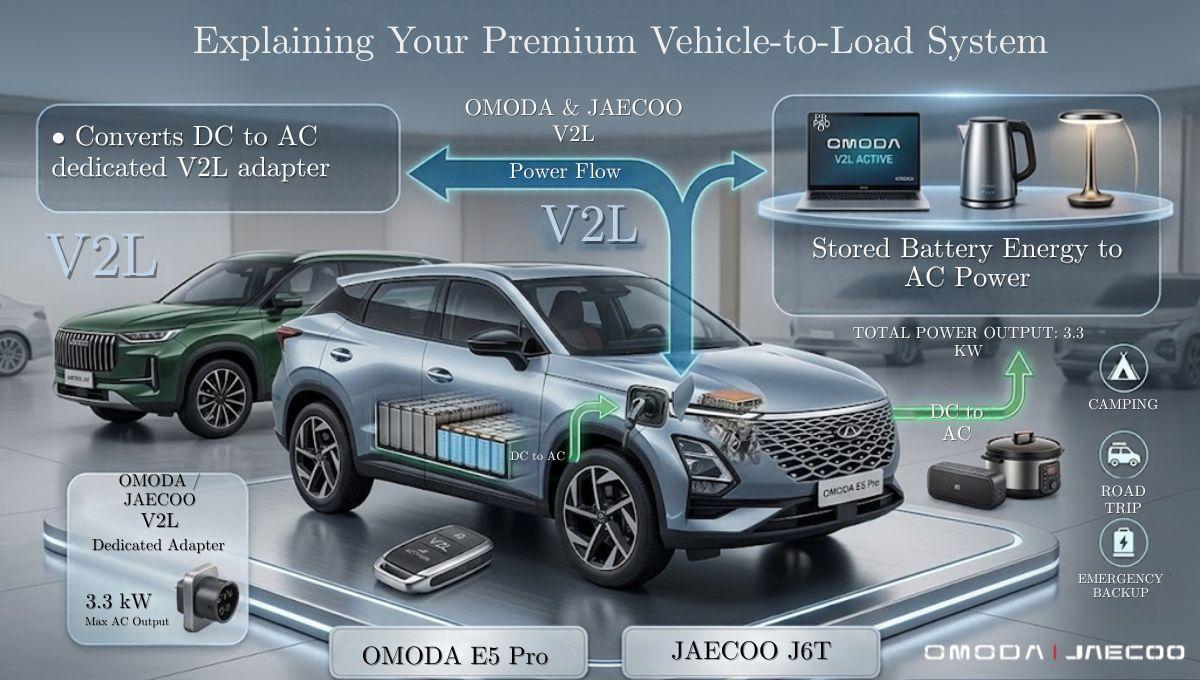
In a conventional EV, electricity flows into the battery during charging and is then used by the electric motor. V2L adds another useful function: stored battery energy can be supplied to external electrical equipment.
The system uses a dedicated discharge adapter connected to the vehicle’s charging interface. The appropriate equipment converts the vehicle’s stored electrical energy into usable AC power for compatible loads.
The maximum stated V2L output is 3.3 kW. At 230V, 3.3 kW is roughly 14.3A at maximum output, so we describe the system by its rated 3.3 kW capacity rather than calling it exactly 13A.
One distinction is important: 3.3 kW is the maximum power output, not a guaranteed runtime. How long a device can operate depends on its power consumption, the vehicle’s battery state of charge, driving requirements, and other conditions.
Jaecoo V2L provides up to 3.3 kW of AC power. That is enough for many everyday electrical devices, but the combined demand of connected equipment must remain within the system’s output limit.
For example, LED lights and phone chargers generally require relatively little power, while kettles, toasters and other heating appliances can draw much more. Equipment with electric motors can also have higher startup demand than normal running power.
That is why we recommend checking the wattage of each appliance before connecting it. If multiple devices are used together, add their electrical requirements rather than looking at each one separately.
We also avoid assigning a fixed number of operating hours to an appliance. V2L output and available battery energy are different things: the first tells us how much power can be supplied at once, while the second depends on how much energy is available in the battery.
Yes. Camping is one of the clearest practical uses for Jaecoo V2L.
Depending on their electrical requirements, compatible equipment can include:
Electric kettles
Coffee makers
Multi-cookers
Toasters
Camping lights
Phone and laptop chargers
A weekend trip from Kathmandu to a destination such as Nagarkot, Pokhara or Chitwan can involve stops where conventional power outlets are not readily available. V2L can provide a convenient source of electricity for selected campsite equipment without requiring a separate fuel generator.
A coffee maker can make a morning campsite more comfortable, while lights can help illuminate the area after sunset. A multi-cooker or toaster can also make meal preparation easier.
The same rule applies throughout check the rated power of the equipment and stay within the 3.3 kW total output. Several high-power appliances should not automatically be assumed to work together simply because each one works individually.
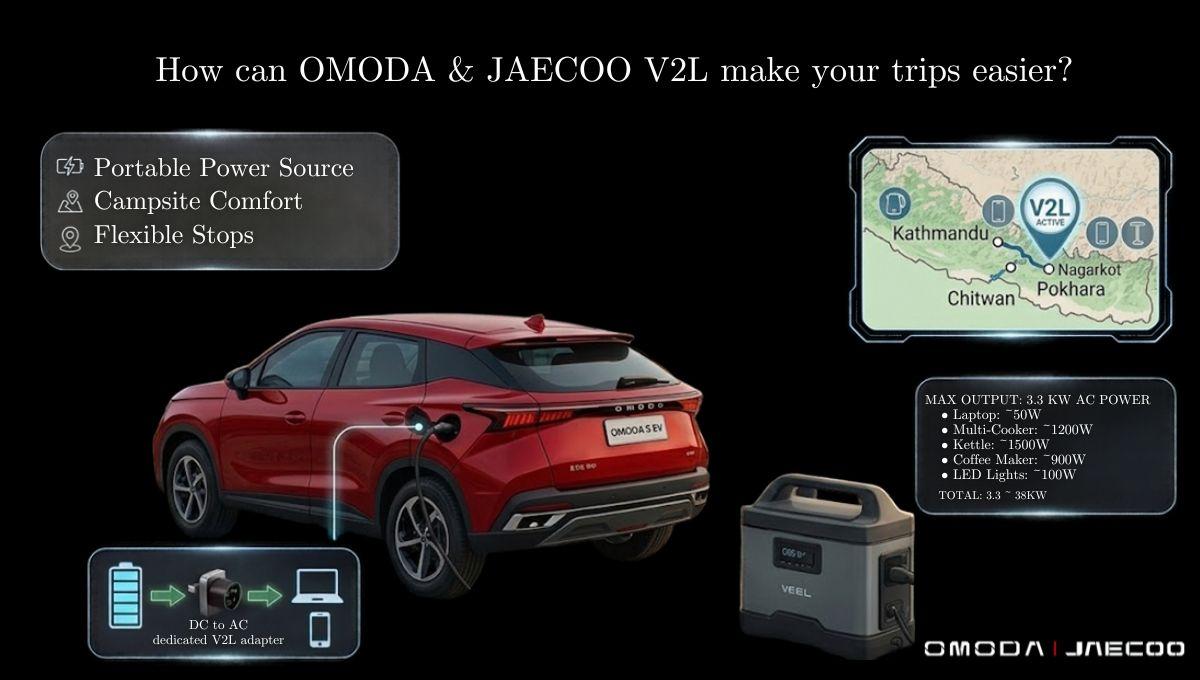
Road trips in Nepal can take us well beyond conventional electrical outlets. V2L adds flexibility by allowing compatible equipment to draw power from the vehicle at a roadside stop, picnic area or campsite.
For families, that can mean charging phones and other devices during a break. For outdoor travelers, it can mean powering lights or small appliances. For people working remotely, it can provide another option for compatible electronics when a conventional outlet is unavailable.
V2L does not replace normal EV trip planning. Electricity supplied to external equipment comes from the traction battery, so using external power means using energy that could otherwise be used for driving.
Actual impact on driving range depends on the electrical load, duration of use, battery state of charge, road conditions, speed, climate-control use and other factors.
For longer journeys, we recommend planning charging stops in advance. Our [EV charging network across Nepal] can help owners identify charging locations along major travel routes. EV charging network across Nepal
V2L can also be useful for selected outdoor work and light-duty equipment where access to mains of electricity is limited.
Depending on their electrical requirements, compatible equipment may include work lights, chargers, selected drills, and other portable tools. This can be useful for temporary maintenance, outdoor setup work, or mobile projects.
However, electric motors can draw more power when starting than during normal operation. A tool that appears to be within the 3.3 kW limit based on its running rating may therefore have a higher startup demand.
We recommend checking the manufacturer’s specifications before using and avoiding combinations of tools that could exceed the V2L system’s output capability.
Yes, V2L can provide temporary electricity to selected compatible devices during a power interruption.
.jpg)
For example, it may be useful for lights, phones, laptops, internet equipment, and selected small appliances. This can help maintain basic communication and convenience when mains electricity is temporarily unavailable.
However, V2L is not the same as a whole-house backup generator.
We should never connect the vehicle directly to household wiring or use an improvised cable to back-feed electricity through a wall socket. That can create a serious electrical hazard.
For whole-home backup requirements, a properly designed electrical system and professional installation are necessary. V2L is best treated as a controlled external power source for compatible equipment.
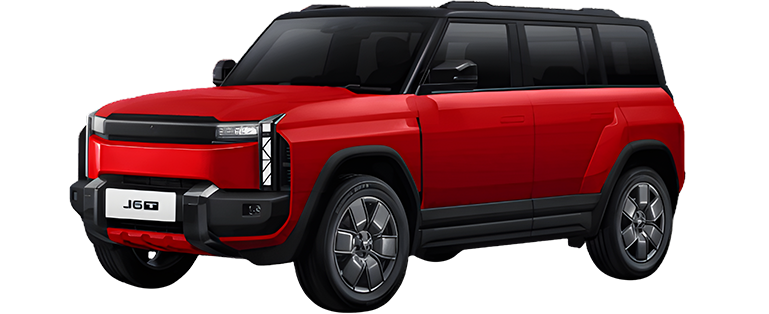
Yes. The JAECOO J5 and JAECOO J6T available in Nepal support V2L with up to 3.3 kW of output. Nepal-market reporting also lists the J6T with a 3.3 kW V2L system.
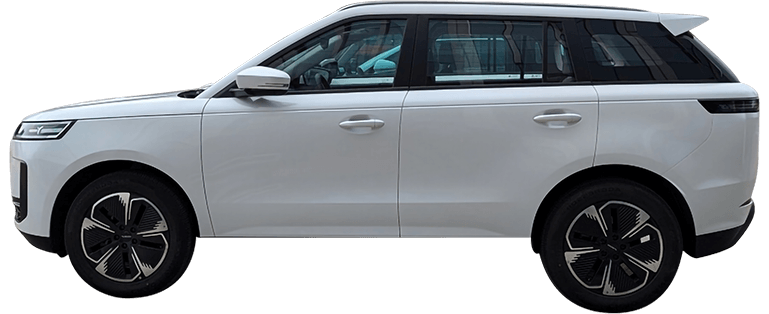
The two SUVs differ in other specifications and are aimed at slightly different driving priorities. The J5 uses a 58.9 kWh CATL LFP battery, produces 155 kW and is listed with up to 461 km of range and 185 mm of ground clearance. The J6T uses a 65.69 kWh CATL LFP battery, produces 135 kW and is listed with up to 431 km of range and 225 mm of ground clearance.
|
Specification |
JAECOO J5 |
JAECOO J6T |
|
V2L output |
Up to 3.3 kW |
Up to 3.3 kW |
|
Battery |
58.9 kWh CATL LFP |
65.69 kWh CATL LFP |
|
Claimed range |
Up to 461 km |
Up to 431 km |
|
Motor power |
155 kW |
135 kW |
|
Drive type |
FWD |
RWD |
|
Ground clearance |
185 mm |
225 mm |
|
Primary use |
Everyday driving and longer trips |
Adventure and mixed-terrain travel |
The important takeaway is that the larger J6T battery does not mean a higher V2L output. Both models have the same stated 3.3 kW maximum V2L power. Battery capacity and V2L output are separate specifications.
For a closer look at both SUVs, our JAECOO J5 and J6T specifications comparison covers their battery, range, ground clearance, charging and capability.
Nepal’s varied roads and travel destinations make portable power a practical addition to EV ownership.
A journey can begin in Kathmandu, continue towards Pokhara or Chitwan, and end at a campsite or destination where access to conventional electricity is less convenient. In those situations, Jaecoo V2L can provide power for selected devices without requiring a fixed electrical outlet.
The feature can also complement the different strengths of the two SUVs. The J5 focuses on everyday usability and range, while the J6T offers greater ground clearance and a more adventure-oriented profile.
V2L is therefore best viewed as an extension of the vehicle’s usefulness. It does not turn the SUV into an unlimited generator, but it can make stored battery energy useful beyond driving.
Safe operation starts using the correct V2L discharge equipment and respecting the vehicle’s 3.3 kW output limit.
We recommend checking the wattage of every connected device, keeping total demand within the system’s capability, and paying attention to equipment with heating elements or electric motors.
Outdoor electrical connections should be kept away from rain, standing water, and damaged cables. This is especially important when using V2L during camping or Nepal’s monsoon season.
Avoid damaged extension cords, overloaded power strips, and improvised adapters. Most importantly, never back-feed a building’s electrical system.
We should also consider how much battery charge remains after V2L use. The energy supplied to external devices comes from the vehicle’s traction battery, so enough charge should remain for the next journey.
Yes. V2L uses energy from the same traction battery that powers the vehicle.
The effect on the driving range depends on how much electricity the connected equipment consumes and how long it operates. Battery state of charge, driving conditions, passenger and cargo load, speed and climate-control use can also affect range.
For this reason, we do not give a fixed runtime such as “X hours per appliance.” The 3.3 kW figure represents maximum V2L power output, not the amount of energy available for a particular duration.
This is the most useful way to understand the feature: V2L provides portable electricity, while actual operating time depends on the battery energy available and the power consumed by the connected equipment.
For us, the value of Jaecoo V2L is its practicality. The technology gives the JAECOO J5 and JAECOO J6T another useful function when we are away from a conventional power source.
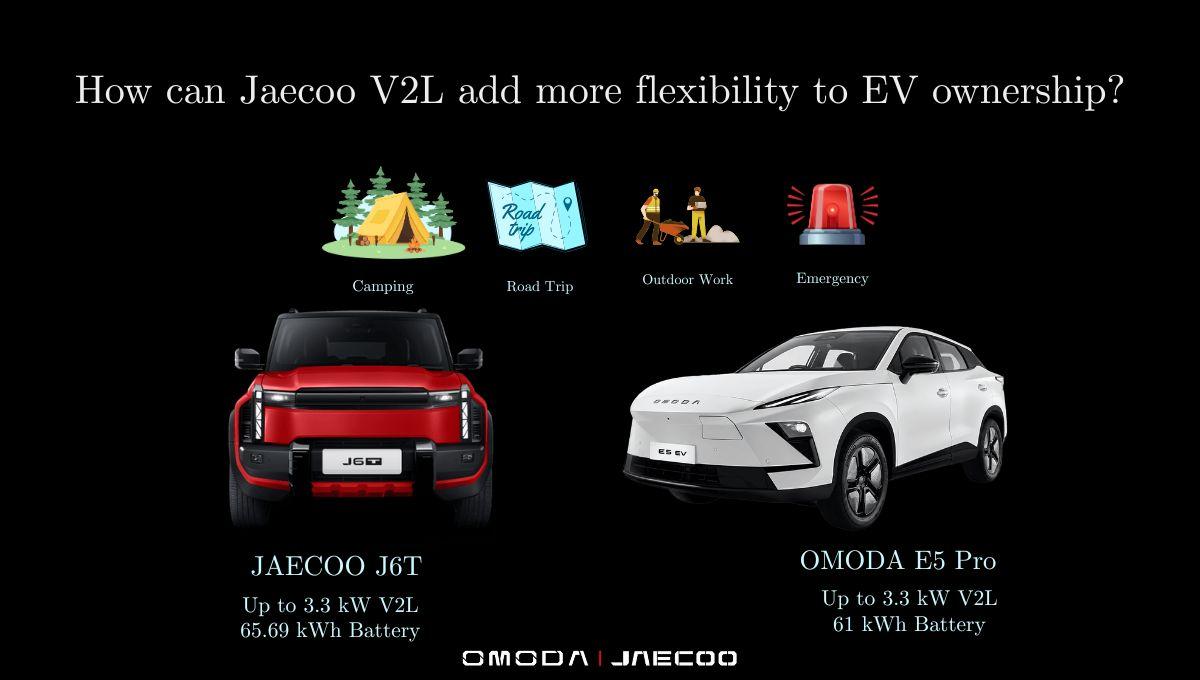
With up to 3.3 kW of AC output, compatible equipment can be powered during camping, road trips, outdoor work, and selected emergency situations. The J5 combines V2L with a 58.9 kWh battery and claims 461 km range, while the J6T offers the same V2L output alongside its larger 65.69 kWh battery, claimed 431 km range and 225 mm ground clearance.
The best way to use the technology is also the most realistic: check appliance wattage, use the appropriate discharge equipment, keep connections safe and dry, stay within the 3.3 kW output limit and retain enough battery charge for the journey ahead.
For buyers exploring the models, the official JAECOO J5 model page provides more information about the J5, while our JAECOO J6T guide covers the J6T’s Nepal specifications and capabilities.
With the right expectations, V2L adds a useful dimension to electric SUV ownership: our vehicle can take us to the destination and, when needed, provide practical portable power once we get there.
V2L stands for Vehicle-to-Load. It allows the EV to supply electricity from its high-voltage battery to compatible external electrical devices.
The JAECOO J5 and J6T available in Nepal are specified with up to 3.3 kW of V2L AC output.
Yes. The JAECOO J5 supports V2L, with the system capable of supplying up to 3.3 kW to compatible external devices.
Yes. Current Nepal-market reporting lists the J6T with a 3.3 kW V2L system.
Compatible appliances can include lights, kettles, coffee makers, multi-cookers, toasters, chargers and selected other electrical devices, provided the combined electrical demand remains within the 3.3 kW limit.
Yes, multiple compatible devices can be used together if their combined demand remains within the 3.3 kW output limit.
Yes. V2L uses the appropriate dedicated discharge adapter to connect compatible external equipment to the vehicle.
Yes, compatible light-duty tools can be powered within the system’s output capability. Check the tool’s normal and startup power requirements before use.
Yes, for selected compatible devices. However, never connect the vehicle directly to home wiring or back-feed electricity through a household socket.
Yes. V2L draws energy from the vehicle traction battery, so energy used by external equipment is energy that is no longer available for driving.