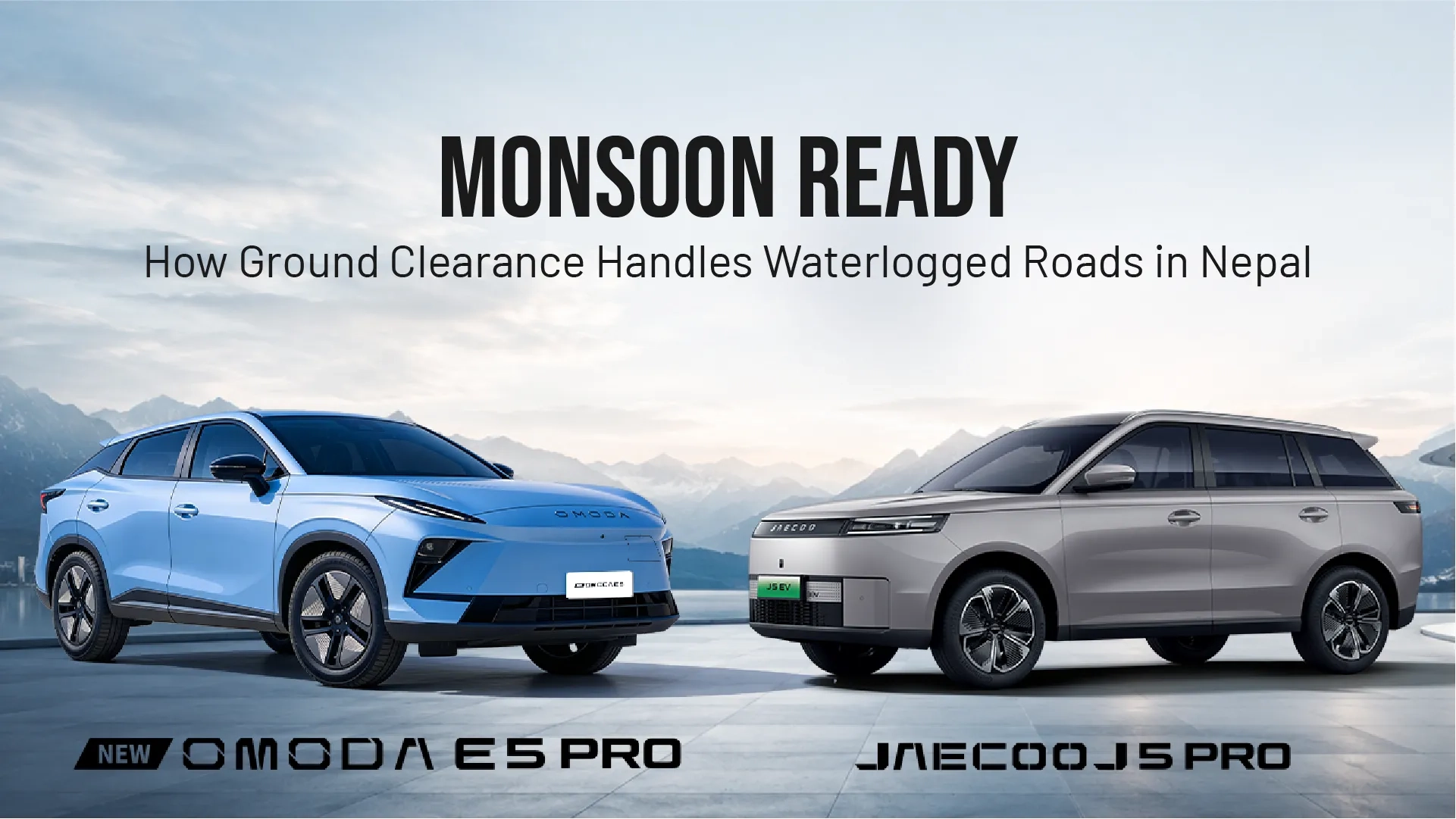
Monsoon-Ready: How Ground Clearance Handles Waterlogged Roads in Nepal
September 18, 2026
Monsoon-Ready: How Ground Clearance Handles Waterlogged Roads in Nepal
September 18, 2026
Ground clearance is the actual clearance between the bottom of the vehicle and the ground.
Conditions where there is partially standing water, but potholes, debris and irregular surfaces are concealed can benefit from higher clearance.
Don't assume that an EV battery or electrical system is waterproof due to its ground clearance.
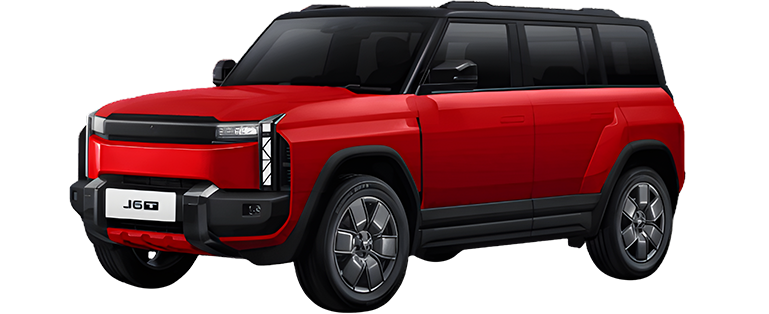
The JAECOO J6T has 225 mm ground clearance and 625 mm water-wading capability.
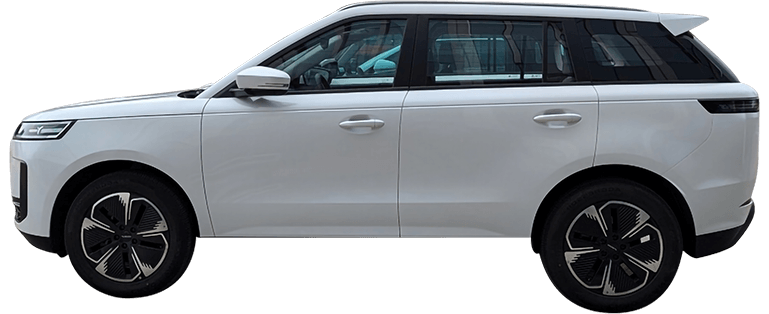
The JAECOO J5 has 185 mm ground clearance and 450 mm wading depth.
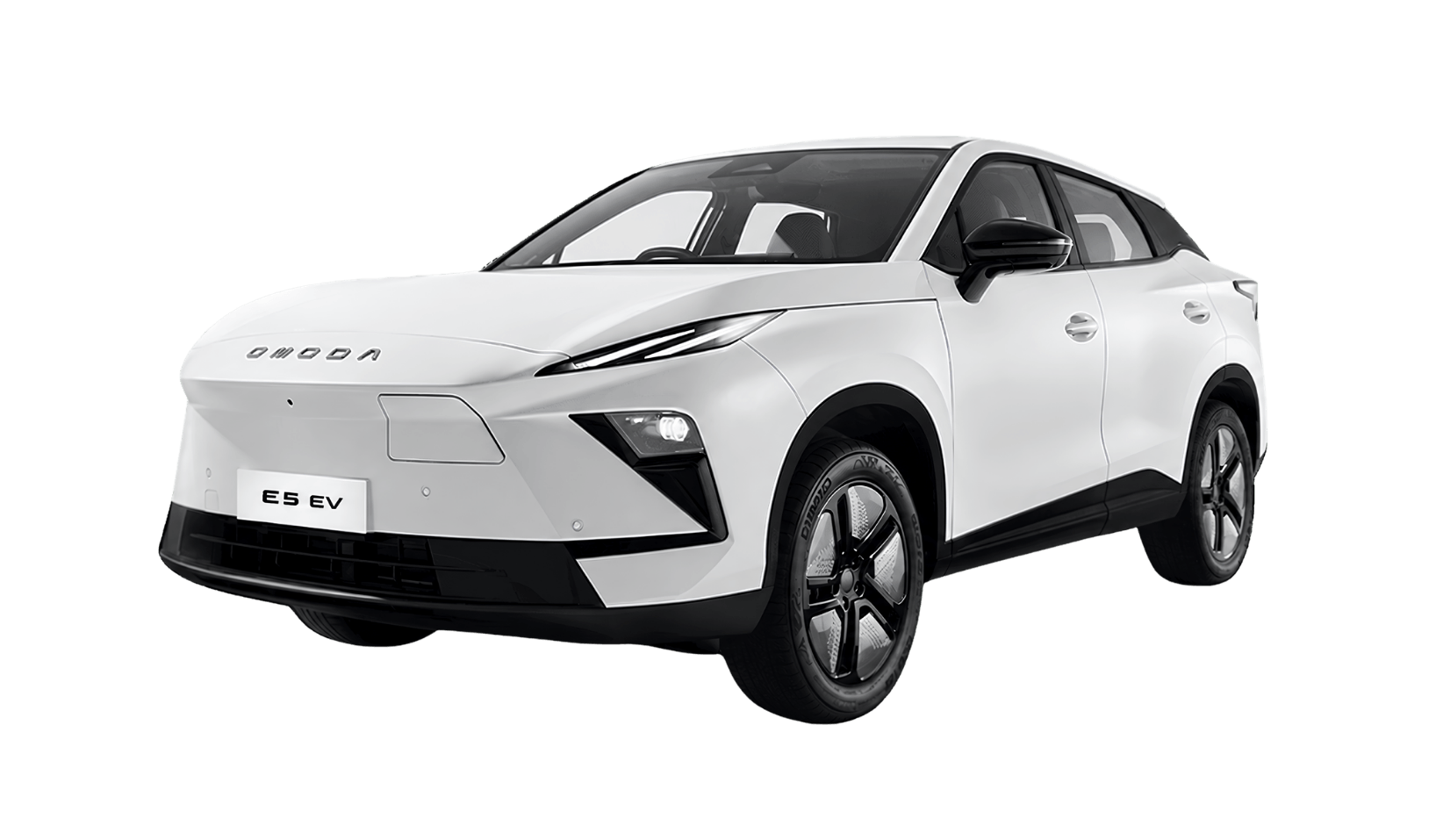
The OMODA E5 Pro's ground clearance is 191 mm while its current Nepal specification doesn't specify a wading-depth figure.
No clearance or wading figure makes unknown, deep or fast-moving floodwater safe.
Tyres, suspension, traction, braking, visibility, and responsible driving are also important when traveling during monsoons.
Nepal roads can vary in just hours during the monsoon season.
During heavy rain, Kathmandu's streets can become waterlogged, which makes it difficult to see potholes and damaged road edges harder to gauge. Outside the Valley, mud, uneven surfaces, debris, and difficult hill-road conditions can make driving even more demanding.
It's the time when buyers of SUVs are thinking about the ground clearance required to drive around puddles on waterlogged roads in Nepal.
There is one important point to note, however, that there is a difference between ground clearance and water-wading depth. Ground clearance is the distance from the bottom of the vehicle to the ground, and the wading depth is the distance a manufacturer states a vehicle can move through water under specific conditions.
If you have an idea about both, it will help you to select an SUV that's most suitable to the roads of Nepal during monsoons.
Ground clearance is the vertical distance from the ground to the lowest point of the vehicle.
This is important on the roads in Nepal when you see potholes, speed breakers, ramps, broken surfaces, and bumpy road edges. During the monsoon, these obstacles may be hidden beneath the water.
A Kathmandu Road may be covered by standing water after heavy rainfall. You might not be able to tell if the ground under the surface is full of a deep pothole or a broken area. The more space there is under the car, the more room there is between the car and the road surface.
That decreases the risk of the underbody hitting an obstruction.
However, ground clearance is not a measurement of safe water depth. Even if you have a high ground clearance vehicle, this can pose significant problems if water accumulates to a sufficient depth, or if it is moving too fast, or if you are driving on a damaged road.
Our ground-clearance guide for electric SUVs in Nepal explains how clearance affects potholes, speed breakers and rough roads.
These specifications tend to get mixed up.
Ground clearance is the distance from the ground to the lowest part of the vehicle.
Water wading depth is a manufacturers specification of the ability to move through water under certain conditions.
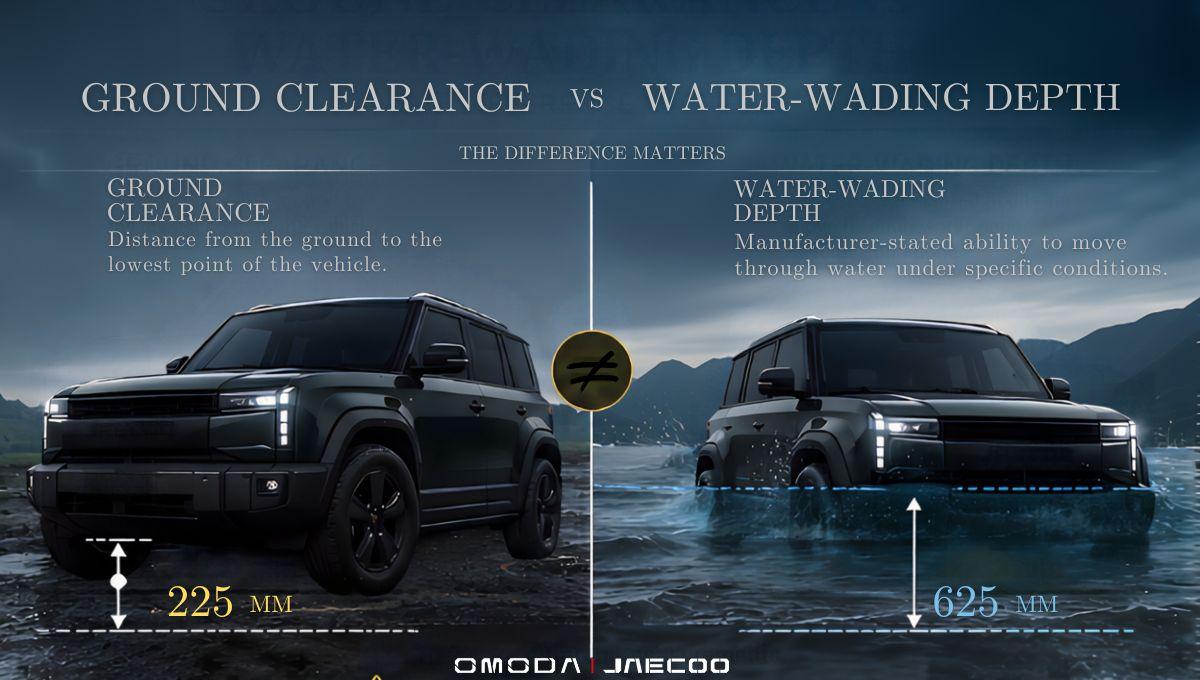
They are not substitutes for each other.
The JAECOO J6T, for example, has 225 mm ground clearance and 625 mm water-wading capability. The JAECOO J5 has 185 mm ground clearance and 450 mm wading depth.
The OMODA E5 Pro offers a ground clearance of 191mm, but the current published ground clearance figure for the Nepal version of the E5 is not readily available.
The difference is significant when assessing ground clearance on water-logged roads in Nepal. Clearance refers to the vertical clearance of the vehicle from the ground, while wading depth refers to another water-crossing ability.
Neither should be regarded as an indication of safe access to flood water.
There is no single figure that is the optimum ground clearance for all Nepali drivers.
For many urban and mixed-road users, ground clearance around 180–190 mm can be a practical range, while drivers who regularly encounter rough roads may prefer greater clearance.
However, it's not just about the number, it's about your route.
When it comes to Kathmandu commuters, their options might lean towards practicality, comfort, and efficiency. A driver who travels the same road regularly on hills might value suspension, tyres, traction, vehicle geometry and other terrain capability more than any other driver.
The best SUV is the one that matches the roads and conditions you actually drive in.
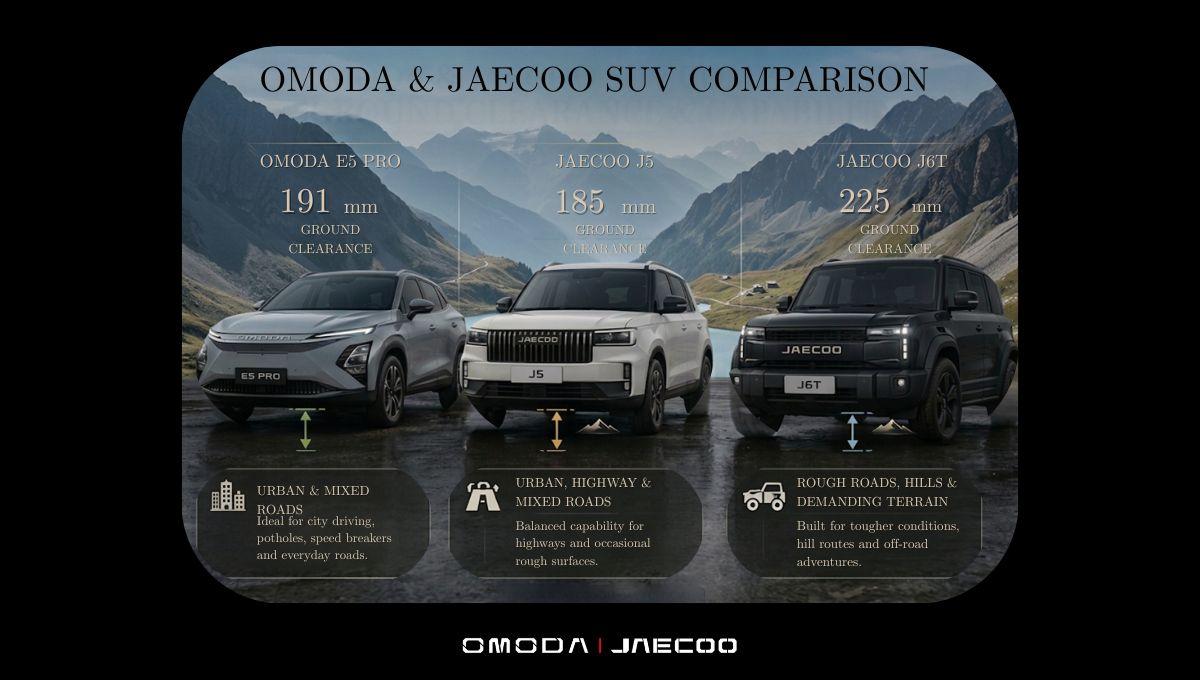
|
Model |
Ground Clearance |
Published Wading Depth |
Best Suited To |
|
JAECOO J6T |
225 mm |
625 mm |
Rough roads, hills and demanding terrain |
|
OMODA E5 Pro |
191 mm |
Not specified |
Urban and mixed-road driving |
|
JAECOO J5 |
185 mm |
450 mm |
Urban, highway and mixed-road driving |
The JAECOO J6T has the highest ground clearance and published wading figures among the models compared here.
It also features nine intelligent driving modes, 55% slope capabilities, H-ARM (360° horizontal and 540° vertical) multi-link rear suspension, and a panoramic camera with a 540° tilt.
With higher clearance, these features also are beneficial for drivers who often encounter rough roads and hill routes.
See our JAECOO J6T off-road and hill capability guide.
The JAECOO J5 offers 185 mm ground clearance and 450 mm wading depth.
It can suit drivers who spend most of their time on urban roads and highways but occasionally encounter rough surfaces or seasonal waterlogging.
The OMODA E5 Pro offers 191 mm ground clearance. The current Nepal specification also includes a 50.7 kWh LFP battery, and 350 km WLTP range.
Its clearance is helpful for urban drivers around potholes, speed breakers, ramps and damaged road surfaces.
The importance of ground clearance for waterlogged roads in Nepal varies by location.
The potholes, open drains and damaged edges of road surfaces may be concealed under waterlogged areas. Clearance can provide additional underbody space, but it cannot tell you how deep the water is.
If the road below is unsafe to cross, keep off the flooded area.
When traveling on hills during monsoon, mud, loose material, damaged surfaces, and varying gradients can be present.
In this case, clearance is combined with suspension, tyres, traction, and car geometry. An elevated clearance may be useful on suitable sloping terrain, but none of the vehicle specifications will render a steep sloping ground safe.
Heavy rainfall can create standing water in urban areas and along road sections in the Terai.
In such cases, ground clearance can prove helpful if the shallow water is on uneven surfaces; however, water depth and road quality should be evaluated independently.
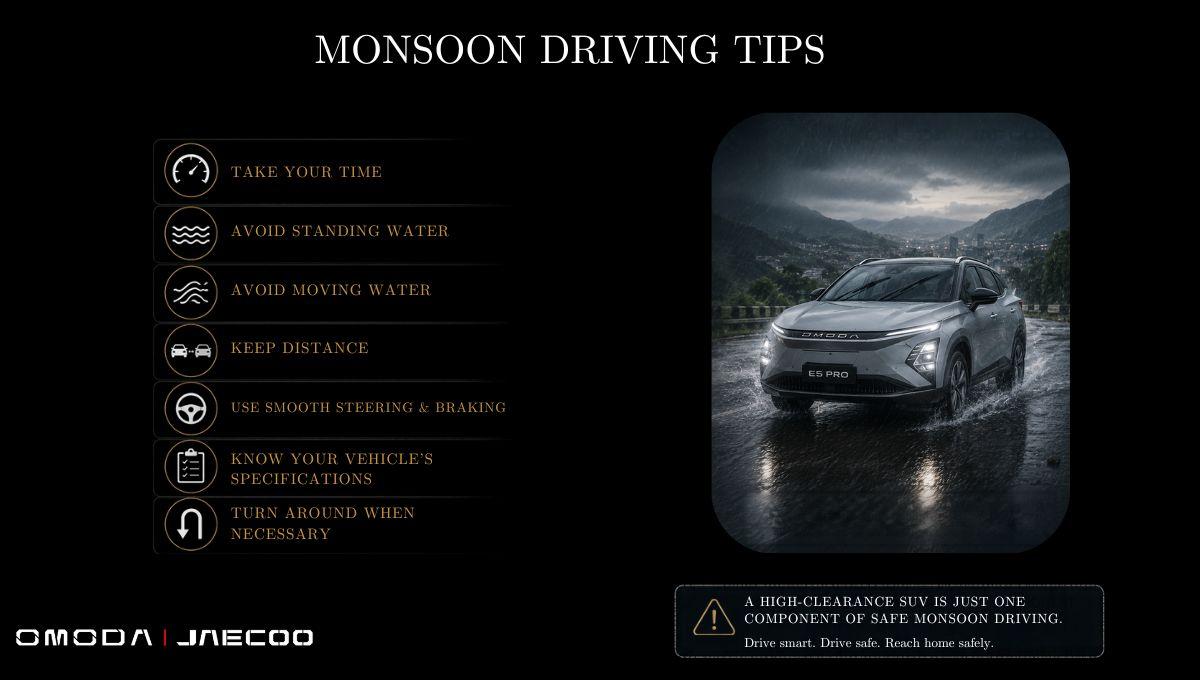
A high-clearance SUV is just one component of safe monsoon driving.
Take your time when approaching standing water. Speed increases the difficulty in judging and controlling the surface and the vehicle.
Avoid driving through standing water; it can hide potholes, open drains, or damaged road shoulders that are impossible to assess safely.
Avoid moving water. Water flow can have dangers that cannot be assessed by looking at the depth alone.
Keep distance from other vehicles. Their route may not be safe for your vehicle.
Use smooth steering and braking. The slippery conditions on wet surfaces can decrease traction.
Know your vehicle’s specifications. Follow the manufacturer’s guidance and stated water-traversing limits.
Turn around when necessary. Road conditions are important and cannot be overcome by the capabilities of a vehicle.
The Nagdhunga-Muglin route is an example of the type of areas that require monsoon readiness beyond flood water.
Rainfall can cause landslides, debris, an uneven surface, and temporary disruptions. If you find you need more ground clearance, it can aid on an appropriate rough section but not make a blocked road or unstable slope safe.
For long journeys to other destinations during the monsoon, please check current road conditions and be prepared for delays or diversions.
When choosing an SUV for Nepal, consider the complete package.
Consider water-wading ability, tyres, suspension, braking, traction and systems, modes and visibility and safety technology.
Access to charging is also significant for EV purchasers on intercity journeys. See our EV charging stations across Nepal.
After-sales support is also important. We at OMODA & JAECOO Nepal have authorized service support at major places such as Kathmandu, Pokhara, Butwal, Biratnagar, and other cities.
You can also compare current OMODA & JAECOO prices in Nepal before choosing a model.
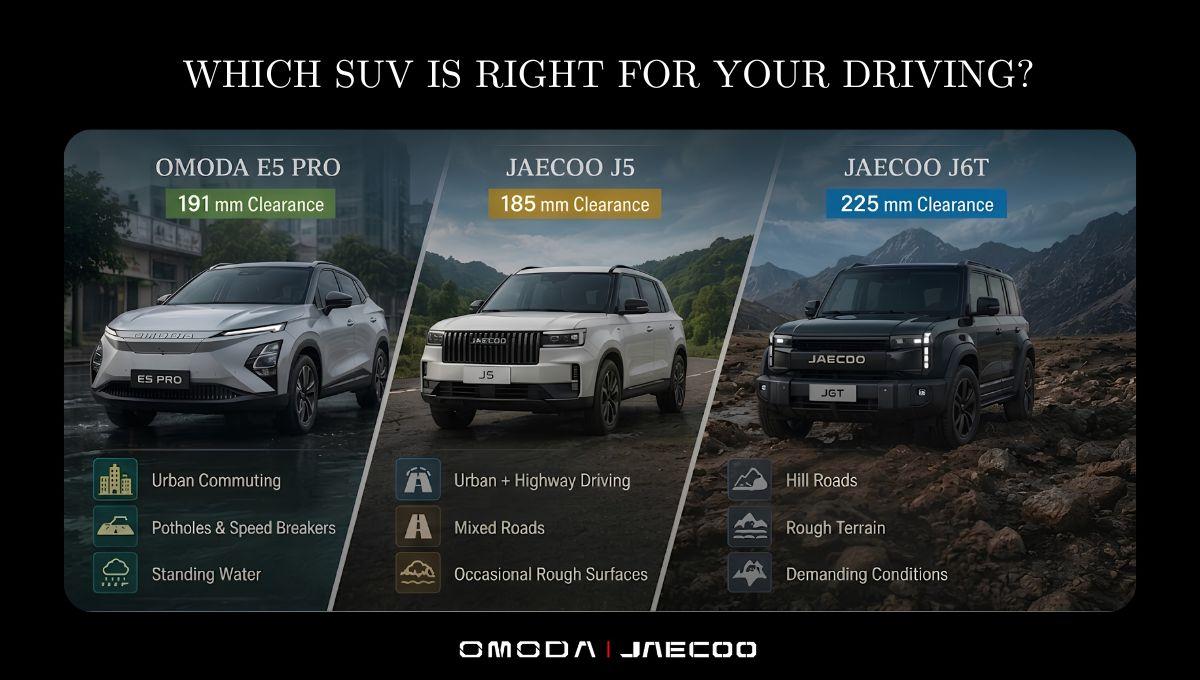
The OMODA E5 Pro's 191 mm ground clearance is ideal for mostly urban driving.
The JAECOO J5's 185 mm clearance and 450 mm wading depth makes for a nice combination for the mixed use of urban and highway and occasional difficult road terrain.
The JAECOO J6T offers 225 mm clearance and 625 mm wading – making it the most capable of the models in this comparison for drivers who are likely to drive on rougher roads, along hill routes and on more challenging terrain.
The best selection is not the highest but is based on your routes.
Ultimately, ground clearance for waterlogged roads in Nepal is one part of choosing an SUV for unpredictable road conditions.
A higher clearance may be needed to make room under the car on uneven surfaces or where water will be shallow. However, not a substitute for careful driving, road-condition inspections or a manufacturer's water-wading instructions.
The OMODA E5 Pro has a clearance of 191 mm, the JAECOO J5 has 185 mm and 450 mm water wading, and the JAECOO J6T has 225 mm clearance and 625 mm water wading.
Select according to the roads you use, know your car's capabilities and remember, in Nepal's monsoon season, the safest road is sometimes not the one you choose.
Ready to find the right SUV for your roads? Book a test drive with OMODA & JAECOO Nepal.
Ground clearance is the distance between the road and the vehicle’s lowest point. It can help when dealing with potholes, speed breakers, ramps and uneven surfaces, especially when monsoon water hides the road underneath.
It does not however specify waterproofing or safe flood depth for the battery.
Ground clearance refers to the clearance between the vehicle and the ground. Wading depth is the maximum water depth a manufacturer states a vehicle can traverse under specified conditions. It should not be interpreted as a universal safe depth for every road or flood situation.
Among the models compared here, the JAECOO J6T has the highest clearance at 225 mm, along with a published 625 mm water-wading capability.
Yes. The OMODA E5 Pro's 191 mm ground clearance is suitable for many normal urban conditions, including potholes, speed breakers, ramps and uneven surfaces.
It should not be taken as a safe water-depth rating.
Yes. When driven according to a manufacturer's guidelines and within appropriate road conditions, EVs can be practical in monsoon conditions.
Consider ground clearance, tyres, traction, braking, visibility and any published water traversing ability.
Drive cautiously afterward and check that the brakes and vehicles are operating normally. If the water is unusually deep or warning lights are displayed, the sounds or the vehicle's behavior are unusual, then arrange a professional inspection.
Yes. Authorized service support is available across major locations in Nepal, including Kathmandu, Pokhara, Butwal and Biratnagar.
If you experience any service issues arising from difficult driving during the monsoons, please reach out to the authorized service team for inspection and advice.